


The Trump administration will not renew the U.S.-Mexico-Canada agreement in its current form, U.S. Trade Representative Jamieson Greer announced Wednesday. The agreement has been a boon to farm country, but…
USDA to Fund $500 Million Expansion of Domestic Fertilizer Production
Reuters’ Karl Plume reported that “U.S. Agriculture Secretary Brooke Rollins announced $500 million in new funding on Wednesday to expand domestic fertilizer production after the Iran war drove up prices.”
“Fertilizer prices have soared since the U.S. and Israel launched the war, as more than 30% of global exports were caught in Iran’s near-total closure of the Strait of Hormuz,” Plume reported. “U.S. fertilizer imports from Middle East ports impacted by the closure fell to zero in May.”
“The price surge has heaped pressure on U.S. farmers, a key constituency for President Donald Trump, as they grapple with low grain prices, elevated costs for fuel and other farm inputs like seeds, and trade disruptions from Trump’s tariff battles,” Plume reported. “The USDA’s Fertilizer Investment and Expansion for Long Term Domestic Supply, or FIELDS, program will prioritize domestic fertilizer production projects that can supply the market quickly and accelerate those that already have private-sector investment, Rollins said.”
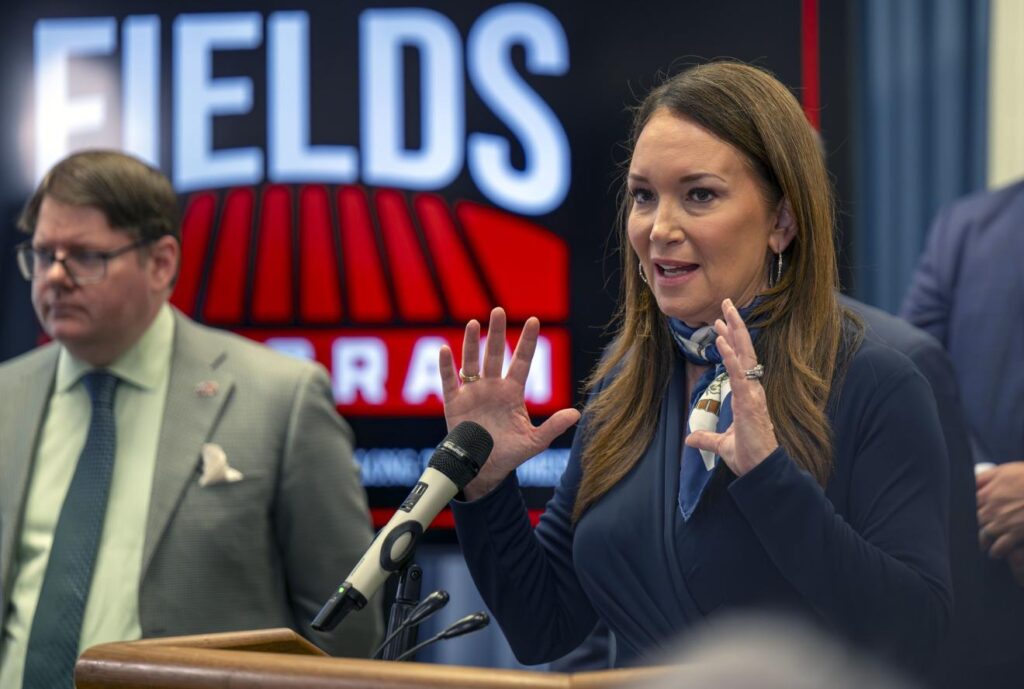
RFD-TV’s Tony St. James reported that, “the funding will support construction and expansion of domestic fertilizer production facilities. USDA says the program will prioritize shovel-ready, financially viable projects that can increase production of nitrogen, phosphate, potash, sulfur, and other critical crop nutrients.”
“Individual awards will range from $15 million to $150 million,” James reported. “USDA says the program will emphasize American-made production, independent competition, farmer-focused benefits, energy security, and measurable increases in production.”
New FIELDS for Fertilizer Production
AgWeb’s Haley Bickelhaupt and Margy Eckelkamp reported that, “previously, the Biden administration launched its $900 million grant program, Fertilizer Production Expansion Program (FPEP.)”
“Rollins said of the 121 FPEP projects, only eight were completed,” AgWeb editors reported. “‘There were several in there looking at worm worms and flower pots and kombucha — lots of climate language craziness. We are obviously pulling all of that back,’ Rollins said. FIELDS is different because of its focus.”
Bloomberg’s Ilena Peng reported that, “the USDA is looking for a ‘small number of projects’ that already have private financing ‘and that with an injection of federal capital can be accelerated to provide actual fertilizer that farmers can purchase quicker,’ Deputy Agriculture Secretary Stephen Vaden said at the event.”
“One example was spoken about by Joshua Westling, CEO J. Westling & Co., LLC, which develops and builds greenfield nitrogen fertilizer plants,” AgWeb editors reported. “A recent project is a $1.2 billion nitrogen complex in Gothenburg, Nebraska with capacity of 365,000 tons of UAN and 140,000 tons of ammonium thiosulfate.”
“‘New production is urgently needed — all of it American made, all of it sold to American farmers,’ he says,” AgWeb reported. “‘But building a fertilizer plant in this country is a daunting task. The hardest part isn’t the engineering, it’s the upfront capital.’”
Limited Reserves of Mined Fertilizers
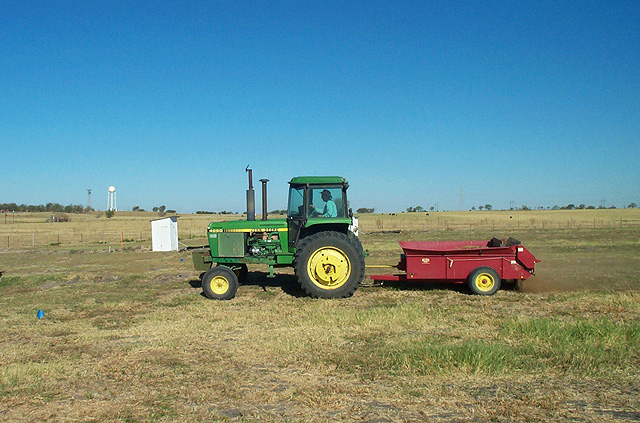
“However, two of the three main types of fertilizer — phosphate and potash — are mined, and the US has limited reserves,” Peng reported.
“The nation produces most of its own phosphate and nitrogen fertilizers, but the foreign supplies it does require have become pricier due to trade policies and global supply disruptions,” Peng reported. “The US imports nearly all of its potash, largely from Canada.
“Trump earlier this week suspended duties on phosphate fertilizers from Morocco, a move that the USDA estimates could drop prices by 22%,” Peng reported.
“The action on fertilizers also comes after the agency on Tuesday said it would invest up to $500 million in mid-size meatpackers to help offset the higher costs associated with a shrinking US cattle herd,” Peng reported. “That program, which excludes the country’s largest meat processors, is meant to hedge against consolidation in the agriculture industry that the Trump administration has repeatedly called out. The Justice Department has ongoing investigations into both the meat and fertilizer industries.”
Related News Summaries