



U.S. agriculture equipment maker Deere on Monday agreed to pay $99 million into a settlement fund for farms and farmers that are part of a class action over costs and…
FCC Foreign Drone Ban Could Impact US Farmers
Politico’s Dana Nickel reported that “the Federal Communications Commission (last week) blacklisted all new foreign-made drones and components over concerns the equipment poses ‘an unacceptable risk’ to national security — ensnaring Chinese drone-maker DJI after long-time concerns that the tech gives Beijing a foothold inside U.S. critical infrastructure.”
“The tech was placed on the commission’s ‘Covered List,’ barring DJI and other foreign drone manufacturers from receiving the FCC’s approval to sell new drone models for import or sale in the U.S,” Nickel reported. “In Monday’s announcement, the agency said that the move ‘will reduce the risk of direct [drone] attacks and disruptions, unauthorized surveillance, sensitive data exfiltration and other [drone] threats to the homeland.'”
“But the rule won’t ground the thousands of unmanned aircraft already deployed in the U.S. The FCC said Monday that the decision ‘does not affect drones or drone components that are currently sold in the United States,’ according to the agency, meaning that drones previously authorized by the FCC are still usable,” Nickel reported. “A spokesperson for the FCC did not immediately respond to questions about potential plans to retroactively ban foreign-made drones or components.”
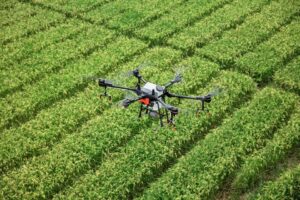
Agri-Pulse’s Kim Chipman reported that the “timing of the ban hits as many farmers are financially struggling in part due to high production costs, making precise application of crop protection products and fertilizers especially important. Such precision increasingly has been accomplished by using drones, also known as unmanned aerial systems (UAS).”
“‘Foreign-manufactured drones represent a significant majority of the agricultural drone market, and sudden restrictions on their use without available domestically manufactured alternatives risk adding new financial and operational burdens for farmers already facing tight margins and market uncertainty,’ the American Soybean Association said in a statement Tuesday,” according to Chipman’s reporting.
Ban Could Increase Domestic Drone Business
WQAD 8’s Haley Bickelhaupt reported that Will Dawson, founder of the Agricultural Drones Initiative, said “policy decisions surrounding drones have significant financial implications for farmers. ‘For farmers, this isn’t a $300 or $5,000 investment,’ he said. ‘This is the difference between buying this or buying a small tractor.'”
“He said the advantage is the FCC’s announcement will drive domestic drone business. He believes reshoring manufacturing could make it easier for farmers to get software they are interested in in their drones,” Bickelhaupt reported. “‘I think that this technology, like I said, is just getting started,’ Dawson said. ‘I think it’s got tremendous opportunities for savings on irrigation, fertilizer, pesticide application, you know, making farmers safer.'”
Agri-Pulse’s Chipman reported that “Republican Sen. Rick Scott of Florida called the ban a ‘huge step forward’ in getting Chinese drones out of the country and supporting American manufacturers.”
“Sen. John Hoeven, R-N.D., said given the growing role of drones both in the military and commercial sector, such technology from Chinese-controlled firms pose a ‘real risk’ to the U.S. and needs to be limited,” Chipman reported. “That’s why we’re working to expand our domestic UAS industry to meet the needs of the U.S. economy, including our agriculture sector,’ Hoeven, a member of the Senate Agriculture Committee and Unmanned Aerial Systems Caucus, said in an emailed statement. ‘Such efforts will reduce our reliance on foreign-manufactured technology while giving the U.S. a competitive advantage in the UAS sector.'”
Bickelhaupt reported that “Dawson noted the FCC’s authority allows it to adjust the policy moving forward and said the rollout could come with challenges. ‘I think that we can expect a little bit of confusion as these rules get rolled out,’ he said. ‘There are going to be some hiccups along the way, but I think we’re on the right path.'”
