



The world's farmers face soaring fertilizer and fuel prices as the war in the Middle East escalates, leaving some scrambling for supplies as the spring planting season approaches and causing…
China Turning to Brazil Soybeans After Meeting US Purchase Pledge
Bloomberg’s Hallie Gu reported that “China, the world’s largest soybean importer, has ramped up orders for Brazilian cargoes of the oilseed after meeting an initial shipment volume from the US as part of a trade truce with Washington.”
“In the past week, importers have booked at least 25 cargoes of the beans for loading mainly in March and April, driven by margins, according to traders with knowledge of the deals,” Gu reported. “At the same time, state-owned companies have appeared to refrain from taking US cargoes, said the people, who declined to be named as they were not authorized to talk to the media.”
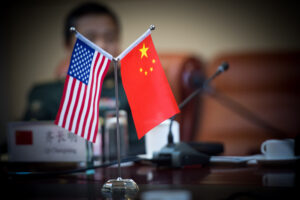
“Soybeans emerged as a key point of contention in US-China trade relations, with Beijing initially shunning American cargoes as their ties soured, before agreeing to take shipments as part of a wider rapprochement. China has purchased about 12 million tons of US soybeans in the last three months, meeting a commitment outlined by the Trump administration in November,” Gu reported. “‘It makes complete sense to step up purchases of Brazilian soybeans after meeting the US pledge,’ said Meng Zhangyu, an analyst at Wuchan Zhongda Futures Co. ‘Brazilian supplies are much cheaper.'”
“US soybeans delivered to China on a cost-and-freight basis are at steep premium over comparable Brazilian beans for February, according to the traders. That means crushing them would incur heavy losses, they said,” Gu reported. “Over the longer term, the US said China has committed to buying at least 25 million tons of US soybeans annually through 2028, and the nation may come back for more American cargoes later this year. ‘As long as the agreed trade-deal framework reached between China and the US gets implemented smoothly, China should be able to carry out the agreement and continue to buy US soybeans,’ said Hanver Li, chief analyst at Shanghai JC Intelligence Co., a China-based commodity consultancy.”
Brazil Soybeans Remain Cheaper than US
Reuters’ Naveen Thukral, Ella Cao and Ana Mano reported that “on November 18, Brazilian soybeans for shipment in December to China were priced at $507.90 per metric ton, below $516.90 for U.S. Gulf supplies and $510.50 for U.S. Pacific Northwest origin, on a cost-and-freight basis, excluding tariffs. At those levels, China would have paid roughly $31 million to $108 million more for 12 million tons of U.S. soybeans than for Brazilian cargoes.”
“Traders do not expect further U.S. bookings, citing higher prices and anticipated bumper crops in major producers Brazil and Argentina,” Thukral, Cao and Mano reported. “‘Our large crop makes our product cheaper than the U.S. one, and this tends to last until the arrival of the new U.S. soy from September,’ said Adelson Gasparin, a grain broker in southern Brazil, who expects China to keep up import levels.”
China, the world’s largest soybean importer, has ramped up orders for Brazilian cargoes of the oilseed after meeting an initial shipment volume from the US as part of a trade truce with Washington https://t.co/H1EWZKmeSF
— Bloomberg (@business) January 27, 2026
“Brazilian soybeans shipped in February are at least 50 cents a bushel cheaper than U.S. Gulf shipments on a free-on-board basis and up to 75 cents cheaper for March shipments, say traders and analysts,” Thukral, Cao and Mano reported. “As the harvest accelerates, Brazilian prices are likely to face further pressure. ‘I think the difference is going to widen out,’ said Dan Basse, president of AgResource Co. ‘Maybe to something like a dollar.'”
China Imported Record Soybean Volumes in 2025
Reuters’ Ella Cao and Lewis Jackson reported earlier in January that “China imported a record volume of soybeans in 2025, as buyers sharply increased purchases from South America amid fears of supply shortfalls if a trade war with Washington persisted.”
“The world’s biggest buyer of the oilseed imported 111.83 million metric tons in 2025, an increase of 6.5% from a year earlier, according to customs data released on Wednesday,” Cao and Jackson reported. “‘Concentrated shipments from major producers, including Brazil and Argentina, drove a sharp rise in imports in the first half, helping lift annual totals to a record high,’ said Liu Jinlu, an agricultural researcher at Guoyuan Futures.”
“That resulted from heightened uncertainty over imports after the China-U.S. trade war escalated in the second and third quarters, prompting Chinese buyers to bring forward large-scale purchases of South American soybeans, she added,” Cao and Jackson reported. “December arrivals rose 1.3% from a year earlier to 8.04 million tons, Reuters calculations based on customs data show.”
