



The American Farm Bureau Federation is calling on President Donald Trump to dampen the Iran war’s shocks to the market for critical agricultural supplies — which are landing as farmers…
Ag Industry Calls for Trade Certainty After SCOTUS Strikes Down Trump Tariffs
Reuters’ Andrea Shalal and Joseph Ax reported that “President Donald Trump said on Saturday he will raise a temporary tariff from 10% to 15% on U.S. imports from all countries, the maximum level allowed under the law, after the U.S. Supreme Court struck down his previous tariff program.”
“The move came less than 24 hours after Trump announced a 10% across-the-board tariff on Friday after the court’s decision. The ruling found the president had exceeded his authority when he imposed an array of higher rates under an economic emergency law,” Shalal an Ax reported. “The new levies are grounded in a separate but untested law, known as Section 122, that allows tariffs up to 15% but requires congressional approval to extend them after 150 days. No president has previously invoked Section 122, and its use could lead to further legal challenges.”
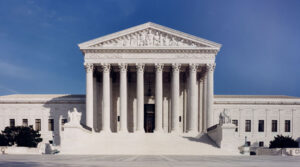
“The Supreme Court’s decision, authored by Chief Justice John Roberts, concluded the law Trump had used for most of his tariffs, the International Emergency Economic Powers Act, did not grant the president the powers he claimed,” Shalal an Ax reported. “Roberts was joined in the majority by fellow conservatives Neil Gorsuch and Amy Coney Barrett, both Trump appointees, and the court’s three liberal justices.”
NBC News’ Lawrence Hurley reported that “the decision does not affect all of Trump’s tariffs, leaving in place ones he imposed on steel and aluminum using different laws, for example. But it upends his tariffs in two categories. One is country-by-country or ‘reciprocal’ tariffs, which range from 34% for China to a 10% baseline for the rest of the world. The other is a 25% tariff Trump imposed on some goods from Canada, China and Mexico for what the administration said was their failure to curb the flow of fentanyl.”
Ag Groups Call for Trade Certainty after SCOTUS Decision
Agri-Pulse’s Oliver Ward and Lydia Johnson reported that “U.S. agriculture groups responded to the Supreme Court striking down President Donald Trump’s emergency tariffs by calling for increased certainty in trade policy and carveouts for ag inputs in any new tariffs.”
“The administration has vowed to pursue its trade agenda through other legal mechanisms. But several agriculture groups and businesses urged the administration to use the pause to recalibrate its tariff policy,” Ward and Johnson reported. “‘Because farmers are caught in a cost-price squeeze and ag input costs remain high, we urge the president to refrain from imposing tariffs on agricultural inputs using other authorities,’ American Soybean Association President Scott Metzger said.”
Successful Farming’s Mariah Squire reported that American Farm Bureau Federation President Zippy Duvall said that “‘in light of today’s Supreme Court ruling, we urge the administration to work swiftly to find other ways to resolve trade disputes and finalize recently announced trade frameworks. With supply costs already at or near record highs, we strongly encourage the president to avoid using any other available authorities to impose tariffs on agricultural inputs that would further increase costs. America’s farmers and ranchers need stability to ensure families across America can put food on their tables.'”
Progressive Farmer’s Chris Clayton and Todd Neeley reported that “Agriculture Secretary Brooke Rollins declined to weigh in on the tariff ruling before Trump spoke on Friday. At the USDA Agricultural Outlook Forum, Rollins said she was at the White House when the decision came down.”
“In her Outlook speech, Rollins pressed that the agricultural trade deficit that the Trump administration inherited is declining ‘because of all of the new trade deals and open markets,'” Clayton and Neeley reported. “She said Trump’s trade agenda has moved to ‘open up more markets than ever before’ for farm products. Trump’s agricultural trade deals, Rollins said, have come with countries that amount to roughly 50% of the world’s economy.”
Supreme Court Decision Likely Lessens Chance of China Buying More US Soy
Reuters’ Heather Schlitz reported that “China may be less likely to follow through on another big purchase of U.S. soybeans that President Donald Trump has been touting for several weeks in the wake of the Supreme Court striking down Trump’s sweeping tariffs, analysts said.”
“‘What Trump has been doing is trying to put China’s feet to the coals, and now we’re asking — will this make China less likely to take delivery of the beans?’ said Darin Fessler, senior hedge advisor at Lakefront Futures,” according to Schlitz’s reporting. “‘The U.S. is still more expensive than Brazil. Without China being forced, why would they want to buy U.S. beans?'”
“China has already purchased 12 million metric tons of U.S. soybeans, fulfilling its end of a trade truce struck in October after it shunned U.S. soybeans for months last year. China’s state buyer, Sinograin, held public auctions to make room for U.S. shipments despite expectations of a bumper soybean crop in Brazil that China could purchase for less,” Schlitz reported. “Without tariffs as a stick, U.S. soybeans would struggle to compete against rival Brazil, where a huge harvest currently underway has made the South American country’s soybeans far cheaper.”
US Officials Say Trade Deals to Remain in Place
Bloomberg’s Catherine Lucey reported that “senior US officials said President Donald Trump’s tariff defeat at the Supreme Court won’t unravel deals negotiated with US partners as they sought to defend the administration’s assertive trade policies.”
“Those deals — which the administration made with partners including China, the European Union, Japan and South Korea — remain in place, US Trade Representative Jamieson Greer said Sunday on CBS’s Face the Nation. He sought to separate those arrangements from the planned 15% global tariff Trump announced Saturday,” Lucey reported. “‘We want them to understand these deals are going to be good deals,’ Greer said. ‘We’re going to stand by them. We expect our partners to stand by them.'”
