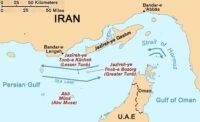


The U.S. and Iranian governments agreed to a temporary ceasefire on Tuesday, but growers should not expect immediate fertilizer price relief, analysts warn. And if lasting peace doesn’t materialize, consumers…
Beef, Most Fertilizers Exempt from New Trump Tariffs
Meatingplace’s Frank Fuhrig reported that “a new 10% tariff on goods from around the world took effect Tuesday — with a list of exemptions including beef. Other exemptions affecting the food and agriculture industries include trade-deal compliant goods from Canada and Mexico, some fertilizers, several categories of light and heavy-duty trucks, pharmaceuticals, and metals including steel and aluminum and metal-containing goods that are already under Section 232 national security tariffs.”
“The 10% tariff under Section 122 of U.S. trade law was announced after Friday’s Supreme Court decision striking down President Donald Trump’s widespread use of tariffs since February 2025 under an emergency powers act that did not authorize tariffs,” Fuhrig reported. “Tariffs under Section 122, which have never before been invoked, require a ‘large and serious’ balance-of-payments deficit, which involves currency imbalances that are impossible under a floating exchange rate system. The Trump administration is instead citing trade balance, which is likely to face legal challenges.”
“Section 122 only allows tariffs for 150 days without congressional action,” Fuhrig reported. “Trump over the weekend wrote on social media that the new ‘Worldwide Tariff’ would be 15% — the cap set in Section 122 — but Tuesday’s action by U.S. customs authorities remains 10%.”
Most Fertilizers Exempt from New Tariffs
Argus Media’s Taylor Zavala reported that “fertilizer imports into the US, except for ammonia, sulfur and sulfuric acid, will remain exempt from the new 10% tax proclamation President Donald Trump signed late last week.”
“Fertilizers exempted from the newly announced import tariffs effective 24 February include urea, ammonium nitrate, UAN, ammonium sulfate, TSP, DAP, MAP, MOP and SOP,” Zavala reported. “Products included in the US-Mexico-Canada free trade agreement are also considered tariff free. But under Annex II of the proclamation, sulfur, sulfur acid and ammonia’s HS codes are not exempt unless imported via the USMCA order.”
“Sulfur imports will likely remain unaffected by the new tariff because Canada is the only major foreign source of supply. About 72% of sulfuric acid imports in 2025 came from Canada and Mexico, based on US Census Bureau data,” Zavala reported. “Other origins, including Europe, Japan, and Taiwan are subject to 10% tariffs. And 55% of US ammonia imports came from Canada in 2025, with the rest largely coming from Trinidad and Tobago, which is also subject to a 10% tariff.”
“Anhydrous ammonia was previously eligible for an exemption under the International Emergency Economic Powers Act (IEEPA) tariffs on a case-by-case basis by the secretary of commerce and the US Trade Representative, depending on the terms of existing or ongoing trade negotiations with each country,” Zavala reported. “But case-by-case exemptions are not detailed in the new proclamation.”
Most USMCA Goods Remain Exempt
Bloomberg’s Alex Vasquez and Thomas Seal reported that “the president said Friday afternoon the US would impose a 10% levy on foreign goods under a different law. It took several hours before the White House clarified it’s leaving in place an exemption for many goods shipped under the US-Mexico-Canada Agreement.”
“That exemption means the effective tariff rate for Canada and Mexico will decline. Until the court decision, products that didn’t qualify for the USMCA exemption were taxed at 35% if from Canada and 25% if from Mexico,” Vasquez and Seal reported. “…The USMCA carve-out exemption allows the US to continue to import oil and other resources from Canada and Mexico tariff-free, and avoids greater disruption in the trade of key manufacturing inputs such as automotive parts. US Trade Representative Jamieson Greer, when asked about existing exemptions, said the White House was seeking ‘continuity’ with the new tariff order, which will take effect on Feb. 24, the day Trump delivers his State of the Union speech to Congress.”
“Punishing tariffs are still in place on steel, aluminum, cars and other categories,” Vasquez and Seal reported. “And Mexican and Canadian officials know that even if using IEEPA is out, the Trump administration is ready to employ other tactics to gain an edge over them.”

Related News Summaries