



Water levels in parts of the Ohio and Mississippi rivers are likely to reach critically low stages soon, forcing shippers to light-load harvest-season grain barges for the fourth year in…
Nebraska Fires Threaten to Delay Cattle Herd Rebuild
Reuters’ Tom Polansek reported that “massive wildfires have burned vast swaths of grazing lands in Nebraska, endangering cattle producers’ plans for production increases that could help ease record-high U.S. beef prices. The loss of grasslands in the second-biggest cattle-producing state removes a feed source for herds and could delay ranchers from expanding as they struggle with widespread drought, state and industry officials said.”
“Fueled by fierce winds, fires have burned nearly 775,000 acres since last week, covering an area about the size of Rhode Island, according to data from the Nebraska Emergency Management Agency. It added the causes of the fires are undetermined,” Polansek reported. “The largest Morrill Fire was about 67% contained as of Thursday after being first reported on March 12, the agency said.”
“That amount of land is a grazing resource for about 40,000 cows, said Sherry Vinton, director of the Nebraska Department of Agriculture. Though cattle deaths were thought to be minimal, producers could delay expansion plans if they cannot find alternative pasture lands or feed, she said,” according to Polansek’s reporting. “‘This will have a definite impact because you are in the heart of cattle country there and that’s the area where you’re going to primarily have breeding stock,’ said Vinton, a fifth-generation rancher.”
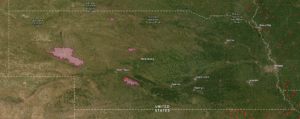
Nebraska Farmer’s Curt Arens reported that “even with record-high cattle prices, the rebuild of the national cow herd, many say, is slower than normal due to drought. Now wildfires in the heart of cow country further hinder a rebuild. ‘Cattle futures rallied today [March 16] and aren’t far off record highs from last fall,’ said Bruce Blythe, commodity editor at Farm Futures. ‘So the Nebraska wildfires would seem to support the bullish-tight supply story.'”
“Drought in the Plains remains a major obstacle to any expansion of the U.S. cattle herd,” Arens reported. “‘The Nebraska fires follow February wildfires that burned over 283,000 acres in northern Oklahoma and southern Kansas,’ Blythe said. ‘With so much pastureland burned, combined with market dynamics, including near-record cattle prices and strong beef demand, it’s difficult to see any meaningful expansion in the overall herd any time soon.'”
“Blythe noted that record-high cattle prices appeared to be driving modest herd expansion before the fires, with USDA projecting a slight 1% increase in beef replacement heifers for 2025,” Arens reported. “‘But even that isn’t considered enough to generate herd growth in 2026 and 2027,’ he said. ‘Live cattle prices are down from record levels posted last fall, but they remain historically high.'”
Ranchers Coming Together to Help One Another
Drovers Angie Stump Denton reported that “with more than 800,000 acres of Nebraska scorched, ranchers are rallying together to overcome loss and support one another. From grass to hay to structures and water tanks, the loss across the state is monumental.”
“There are multiple stories of local fire departments, neighbors and family members creating fire breaks and helping move livestock and equipment out of danger zones,” Stump Denton reported. “‘We’ve had a remarkable, unprecedented response to stop this fire and we will come up with an equally innovative solution for recovery,’ says Nebraska Department of Agriculture (NDA) Director Sherry Vinton.”
“While the stories of ranchers helping each other during the intense fire danger on Thursday and Friday are moving, that commitment to helping one another continues long after the smoke cleared,” Stump Denton reported. “(Sara) Cover is one of the Sandhills ranchers who is helping with recovery efforts and the Nebraska Sandhills Rancher Fire Relief group, which is providing boots-on-the-ground assistance in coordinating donations of hay, supplies and financial support.”
“‘Half these firefighters are volunteer firefighters that also had cows calving at home,’ Cover explains,” according to Stump Denton’s reporting. “‘So, it’s also the self-sacrifice of leaving your ranch during the busiest time of year to go help others.'”
“Many Sandhills ranchers have their own fire rig, so Cover explains in many cases the husbands would leave and go fight fire, leaving their wives and kids home calving cows. There are other examples of multiple generations — grandparents, parents and kids — all working together to fight the fires,” Stump Denton reported. “‘It just takes everybody,’ Cover says.”
