



Senate Agriculture Chair John Boozman said Monday he plans to soon take up a five-year farm bill, regardless of delays a similar bill may face in the House. Asked at…
U.S. Corn Acres to Fall in 2026, Surveys Show
Reuters’ Karl Plume reported that “the Iran war has upended the planting intentions of U.S. farmers, resulting in fewer acres of corn and the lowest quantity of spring wheat planted since 1970 as rising fertilizer and fuel costs and low grain prices dim the outlook for profits, analysts said ahead of a U.S. government report due on Tuesday.”
“Soybean seedings, meanwhile, are expected to jump as some growers shift acres away from corn and wheat, which require more costly fertilizer, they said,” according to Plume’s reporting. “Farmers are entering the critical spring planting season under a cloud of uncertainty as the U.S.-Israeli war with Iran disrupts global trade, causing fertilizer and diesel costs to spike. The long-term U.S. trade relationship with China also remains unclear amid the ongoing trade war launched by President Donald Trump’s administration with the top soy importer.”
“Analysts polled by Reuters, on average, projected corn plantings to drop to 94.371 million acres, down from 98.788 million acres in 2025, which was the most since 1936. Soybean seedings were seen at 85.549 million acres, up from 81.215 million a year ago,” Plume reported. “Plantings of spring wheat, grown in the northern Plains, are forecast to drop to 9.843 million acres, down from 9.990 million last year and the lowest since 1970. Prices for the high-protein grain have slumped since a record Canadian harvest last year.”
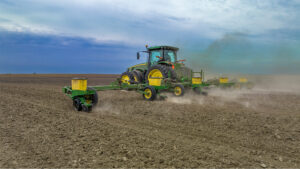
“Farmers in the U.S. Midwest farm belt normally rotate their fields with corn one year and soybeans the next to preserve soil health and maximize yield potential. But profit projections and input costs can prompt farmers to deviate from their crop rotations in some fields,” Plume reported. “‘The fertilizer cost and fertilizer availability are the main drivers right now,’ said Rich Nelson, chief strategist with Allendale. ‘But I would point out that we have questions about whether the USDA’s report will show the true story.'”
Other Surveys Also Show Fewer Corn Acres
The Reuters analyst survey joins a growing list of analyst and farmer surveys in recent weeks that show corn planted acres in the U.S. falling this year from the 2025-2026 season.
Successful Farming’s Cassidy Walter reported that “less than a week before the USDA is set to release its latest projections, the 2026 Kluis/Successful Farming Planting Intentions Survey revealed American farmers plan to seed more soybean acres this year, and fewer corn acres.”
“According to the Kluis/SF survey, farmers anticipate planting 96.7 million corn acres for the 2026–2027 crop year, down from 98.8 million in 2025–2026,” Walter reported. “…The Kluis/SF survey found farmers intend to plant more soybean acres year-over-year but fewer than the USDA forecasted in February.” The survey shows that farmers intend to plant 84.4 million acres of soybeans.
AgWeb’s Michelle Rook reported that “ahead of USDA’s March Planting Intentions Report, Allendale released the results of its 25th annual nationwide acreage survey. The survey of farmers in 26 states mirrored the projections from USDA’s Ag Outlook Forum in February.”
“Farmers responding to Allendale’s survey indicate they intend to plant 5.1 million acres less corn in 2026, at 93.7 million acres. That compares to USDA’s 94 million acre projection,” Rook reported. “…Allendale’s survey also pegged U.S. soybean acres to be up 4.44 million from 2025 at nearly 85.7 million acres. That compares to USDA’s 85 million acre estimate at the Ag Outlook Forum.”
Rich Nelson, Allendale’s chief analyst, “says the biggest increases showed up in the Western Corn Belt,” Rook reported. “‘So, we saw some areas in some specific regions of some states in the Western Corn Belt where a region within a state might be making as much as a 15% or maybe 18% movement away from corn into soybeans. Over in the Eastern Corn Belt almost everybody’s doing a relatively slow light and consistent movement.'”
