

Season-average price estimates for wheat, corn, soybeans, soybean meal, cheese and cotton were all raised slightly in the Agriculture Department’s latest World Agricultural Supply and Demand Estimates (WASDE) report published…
Strait of Hormuz Blockade Could Further Hit Fertilizer Prices
Bloomberg’s Weilun Soon and Clara Ferreira Marques reported that “US President Donald Trump’s plan for a full naval blockade of the Strait of Hormuz threatens to deepen an already unprecedented crisis in one of the world’s most important energy-producing regions.”
“The narrow waterway connecting the Persian Gulf to the wider world has become a flashpoint since the US and Israel began strikes on Iran six weeks ago. Tehran tightened its grip on the corridor in response, all but closing off a vital thoroughfare,” Soon and Ferreira Marques reported. “A full blockade could halt the remaining flows and threaten economies far beyond the Middle East.”
“Transits have dwindled to single digits a day, down from about 135 in peacetime,” Soon and Ferreira Marques reported. “A US naval blockade along the lines of what was carried out off Venezuela from the end of last year could reduce that to zero, pressuring Iran but also cutting off a vital source of supply for Asian nations.”
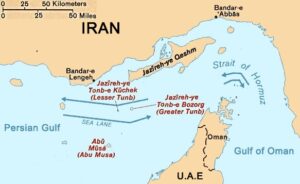
News Nation’s Brooke Shafer reported that “it’s not just 20% of the world’s oil that travels through the Strait of Hormuz — it’s fertilizer, too. About one-third of the world’s fertilizer travels through the strait, according to the United Nations.”
“That includes nitrogen fertilizers, which require liquified natural gas, and phosphate fertilizers, made from urea, ammonia and sulfur. Fertilizers are paramount to producing wheat, fruit, corn, rice and more,” Shafer reported. “This blockade could drive up prices for those fertilizers, which have already spiked by more than 40% from last year. Combined with gas and diesel costs, the price of producing food will skyrocket.”
Trump Says He’s Monitoring Fertilizer Prices
Agri-Pulse’s Kim Chipman and Oliver Ward reported that “fertilizer prices – particularly urea relied on for growing grains and certain fruits and vegetables – have surged since the beginning of the conflict, and are likely to stay high in the near term, analysts say. Last week saw additional price pressures after India issued a tender to import 2.5 million tons, and Bloomberg reported that China could soon ban sulfuric acid exports – a key fertilizer input.”
“Trump said Saturday in a social media post that he is watching fertilizer prices closely, but focused his attention on market concentration in the U.S. economy, instead of actions overseas,” Chipman and Ward reported. “‘The United States will not accept PRICE GOUGING from the fertilizer monopoly!’ he wrote. ‘American Farmers, we have your back!'”
China Banning Sulfuric Acid Exports Could Hit Fertilizer Market, too
Bloomberg’s Julian Luk and James Attwood reported that “China has indicated it will halt exports of sulfuric acid from May, hitting metals and fertilizer industries already strained by raw material bottlenecks resulting from the Iran war.”
“Some sulfuric acid producers in the country recently received notifications about the change, and one large buyer has been told about it by their Chinese supplier, according to people familiar with the matter, who asked not to be identified discussing confidential information,” Luk and Attwood reported. “The ban will cover sulfuric acid that’s a by-product of copper and zinc smelting in China.”
“Sulfuric acid prices have been rising since the start of the Iran conflict, as the effective closure of the Strait of Hormuz blocks sulfur shipments from the Middle East, where it’s a product of oil and gas refining,” Luk and Attwood reported. “The region produces one third of the world’s sulfur, a raw material used to make sulfuric acid that’s essential for some copper extraction and phosphate fertilizers.“

Related News Summaries