Reuters’ Ella Cao, Trevor Hunnicutt and Naveen Thukral reported that “China and the United States may reach a farm deal at their summit this week that expands Beijing’s purchases of grains and meat, but market watchers said they did not expect major new soybean purchases beyond what was agreed in a deal last October.”
“Agriculture is among the less-contentious areas of the bilateral relationship, but the final shape of any deliverables from the May 14-15 summit between U.S. President Donald Trump and his Chinese counterpart Xi Jinping remains uncertain just days out, officials, traders and analysts said,” according to Cao, Hunnicutt and Thukral’s reporting. “The White House is seeking bigger commitments from Beijing on soybean and other agricultural purchases, said a person familiar with the talks.”
Bloomberg’s Michael Hirtzer, Erin Ailworth, and Hallie Gu reported that “while farmers broadly expect an agriculture deal to be made at the summit, enthusiasm is waning that it will be large enough to transform tough economic conditions. They’re also more resigned to US crops becoming a chip in trade negotiations rather than part of an open market.”
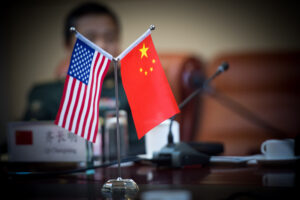
“‘I’m a little apprehensive as to what will come out of it,’ said Scott Metzger, an Ohio grower and president of the American Soybean Association,” according to Hirtzer, Ailworth and Gu’s reporting. “‘We want to make sure that there is actually something signed and documented instead of just word of mouth.'”
“More thorny issues such as Iran and Taiwan will also be addressed at the summit, with executives from companies such as crop trader Cargill Inc. and Boeing Co. part of talks,” Hirtzer, Ailworth and Gu reported. “That may make it difficult for agriculture to garner a lot of focus, although it could be an area the two sides hone in on if they struggle to find successes elsewhere, said Vitor Pistoia, senior grains and oilseeds analyst at Rabobank in Australia.”
“‘The most realistic outcome is continuity rather than a major new deal,’ said Kang Wei Cheang, an agricultural broker at StoneX in Singapore,” according to Hirtzer, Ailworth and Gu’s reporting. “‘Agriculture is being used as a stabilizing tool to signal cooperation, but not enough to materially tighten global supply‑demand balances or shift market direction.'”
Reuters’ Cao, Hunnicutt and Thukral reported that “traders and analysts said any deal is likely to be limited by what they see as Beijing’s unwillingness to buy more soybeans, the biggest-ticket crop, beyond a commitment made last October, given weak demand and cheap alternatives from Brazil.”
China Could Buy More U.S. Corn, Sorghum
Bloomberg’s Hallie Gu, Alfred Cang, and Lucille Liu reported that “Chinese officials are in discussions with US counterparts to buy American crops, including corn, and could reach a deal during US President Donald Trump’s visit to China this week.”
“China could take US corn, as well as products including sorghum and distillers dried grains, according to traders briefed on the matter,” Gu, Cang and Liu reported. “Soybeans, a cornerstone of agricultural trade between the two countries, are also part of the discussions, they said, asking not to be identified because they are not authorized to speak publicly.”
“China shunned American farm goods for much of last year as the US ratcheted tariffs higher on a host of its products. However, a trade truce struck between the two sides late last year revived flows, with China buying some 12 million tons of soybeans in the months shortly thereafter,” Gu, Cang and Liu reported. “Purchases of other crops have remained more limited, with China’s faltering economy weighing on demand for foreign grain. The last significant purchases of US corn were about two years ago. American shipments haven’t cleared Chinese customs since mid-2025, albeit at minimal levels, official data show.”
“The corn trade, if it materializes, would form part of China’s bargaining strategy, as Beijing deploys agricultural trade to gain leverage during its negotiations with Washington,” Gu, Cang and Liu reported. “Buying foreign corn appears attractive, too. Domestic prices have climbed after heavy rains damaged some crops last year, and imports in the first quarter trebled versus the prior year, mostly from Brazil and Russia. That’s making US cargoes appealing even with the extra 10% tariff still imposed on American products, traders said.”