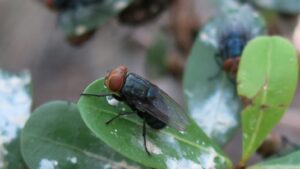
Meatingplace’s Chris Moore reported that “USDA confirmed the first detection of New World screwworm in the United States in decades after identifying the pest in a 3-week-old calf in South Texas, prompting an aggressive federal and state response aimed at containing the outbreak of the parasitic insect.”
“The USDA’s Animal and Plant Health Inspection Service said larvae were found in the calf’s umbilical area in Zavala County, Texas,” Moore reported. “New World screwworm adult females lay fertilized eggs in wounds of warm-blooded animals, where newly hatched larvae burrow into living flesh, causing severe injury and economic losses. USDA said no additional detections had been identified as of the announcement.”
“USDA and Texas animal health officials immediately activated response protocols outlined in the agency’s New World Screwworm Response Playbook. Actions include establishing a 20-kilometer infested zone around the detection site, implementing quarantines and movement controls, increasing surveillance and deploying additional sterile flies to the area,” Moore reported. “USDA said ground release chambers would supplement the approximately 4 million sterile flies already being released aerially each week.”
New World screwworm. Courtesy of the USDA.Agri-Pulse’s Noah Wicks reported that Agriculture Secretary Brooke Rollins said that “‘if we all work together and follow the animal treatment protocols and movement restriction guidance, there is no reason to believe that this incursion will result in an establishment of the pest in our country.’”
“USDA Undersecretary for Marketing and Regulatory Programs Dudley Hoskins said agency officials ‘will continue to try to flood the zone with as many sterile flies as we can get there until we have confidence that we’ve knocked it down in that area and we can return to our normal posture,'” Wicks reported.
An Outbreak Could Cost U.S. Cattle Ranchers Billions
Reuters’ Cassandra Garrison, Heather Schlitz and Tom Polansek reported that “the detection also threatens Texas’ livestock industry, which could face up to $1.8 billion in estimated economic losses if the pest spreads, and represents a setback for U.S. efforts that cost millions of dollars to keep the pest out, experts said.”“An extensive outbreak could deal a huge economic blow to ranchers in Texas, the biggest cattle-producing state, through livestock deaths, labor costs and medication expenses,” Garrison, Schlitz and Polansek reported. “Washington has kept its border with Mexico closed to livestock imports for more than a year in an effort to prevent the parasite from reaching U.S. border states, spending millions of dollars to slow its advance through Mexico, investing in sterile fly production facilities, expanding trapping efforts and increasing livestock surveillance.”
As expected, @USDA_APHIS confirmed the detection of a New World Screwworm (NWS) fly in a 3 week old bovine in Zavala County, Texas. @USDA and Texas Animal Health @TAHC officials are taking immediate action to contain and eradicate NWS from the area.
“Mexico has confirmed 27,449 cases of screwworm since November of 2024, with 2,094 cases classified as currently active. It has also increased livestock inspections and said that a sterile fly production plant in the country’s south, which the U.S. helped fund, would be operating by the end of June,” Garrison, Schlitz and Polansek reported. “The last outbreak in the U.S. border states in the 1960s decimated the local wildlife population and caused millions of dollars in damage to ranchers.”
“On Wednesday, most-active August feeder cattle fell 5.80 cents to finish at 342.625 cents per pound,” Garrison, Schlitz and Polansek reported. “August live cattle futures fell 1.8 cents to 237.85 cents per pound. Shares of major meatpackers Tyson Foods and JBS also fell.”
Construction Continues on Sterile Fly Facilities in U.S. and Mexico
Progressive Farmer’s Jennifer Carrico reported that “since February 2026, more than 129 million sterile NWS flies have been released in the sterile fly release zone, which includes the area where this case was found in Texas.”
“Sterile flies are the best way to combat the pest, as the fly will only mate once. The release of sterile flies to mate with wild flies prevents further reproduction,” Carrico reported. “Currently, Panama has the only NWS sterile fly production facility, which produces around 100 million sterile flies per week. A facility in Metapa, Mexico, is expected to open soon, producing 60 million to 100 million sterile flies per week. Construction also continues at Moore Air Base in Edinburg, Texas, of a facility to produce 100 million sterile flies per week. Completion of the facility is expected in November 2027, and then it will gradually ramp up to producing 300 million sterile flies per week.”
Texas Ag Official Expresses Frustration with Government Response
NBC News’ Elmira Aliieva reported that the detection “follows months of warnings from U.S. and Texas agriculture officials and cattle industry leaders, as the pest steadily moved north through Mexico toward the American border.”
“‘For months, the screwworm has advanced rapidly through Mexico in spite of the USDA’s existing gameplan,’ Texas Agriculture Commissioner Sid Miller said Wednesday, adding that ‘instead of using every available tool, USDA moved too slowly and relied solely on a partial solution that takes years to fully implement,’” Aliieva reported. “Miller has also called on President Donald Trump to take direct control of the government’s response, and ‘throw every available federal resource at this threat before it becomes a full-blown agricultural disaster.'”