



The National Treasury Employees Union Chapter 226, which represents Food and Nutrition Service employees, says more than 80% of staff who took an internal survey claim they will not relocate…
Coke Cane Sugar Switch Threatens Ag Jobs, Corn Refiners Say
Reuters’ Marcelo Teixeira, Karl Plume and Renee Hickman reported that “a possible move by Coca-Cola and other beverage and food industries to use cane sugar instead of corn syrup as a sweetener would be difficult and expensive to implement, while mostly negative for farmers in the United States.”
“U.S. President Donald Trump said (last week) that Coca-Cola had agreed to use cane sugar in its beverages in the country after his discussions with the maker of the top soda pop brand,” Teixeira, Plume and Hickman reported. “…In response to Trump’s comment, Coca-Cola said ‘more details on new innovative offerings within our Coca-Cola product range will be shared soon.'”
“Industry analysts, however, said changes in the formulation of the rest of the Coke sold in the U.S., and other beverages and candies, would involve significant adjustments to companies’ supply chains, since corn syrup and sugar come from different producers. It would also involve changes to product labeling, and cost more,” Teixeira, Plume and Hickman reported. “…The Corn Refiners Association said the complete elimination of high fructose corn syrup from the U.S. food and beverage supply would cut corn prices by up to 34 cents a bushel, resulting in a loss of $5.1 billion in farm revenue.”
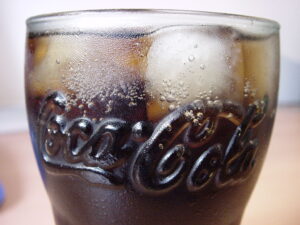
In addition, News Nation’s Meg Hilling and Mills Hayes reported that “the Corn Refiners Association, which represents high-fructose corn syrup producers, said the change threatens thousands of jobs and risks devastating primarily Midwest American farms.”
“‘There are about 10,000 people working in corn refining. One-third of the corn refined goes for making high-fructose corn syrup,’ said John Bode, president and CEO of the Corn Refiners Association,” according to Hilling and Hayes’ reporting. “‘If we eliminate high-fructose corn syrup use, that’s going to have a very substantial effect on at least a third of the production, probably significantly more of the corn refining industry. So that’s thousands of jobs.'”
Widespread Switch to Cane Sugar Could Impact Corn Industry
Fortune’s Sasha Rogelberg reported, however, that “corn syrup production in the U.S. accounts for 410 million bushels of the country’s 15.5 billion bushels of corn, making up less than 3% of the industry’s total, according to data from the U.S. Department of Agriculture’s Economic Research Center.”
“With Coca-Cola’s use of high-fructose corn syrup representing a fraction of that fraction, the company making the switch to cane sugar wouldn’t have an outsized impact on the industry as a whole, according to Scott Irwin, the Laurence J. Norton Chair of Agricultural Marketing at the University of Illinois Urbana-Champaign,” Rogelberg reported. “‘For Coca-Cola to remove it completely would be a pretty small blip in the corn market,’ he told Fortune.”
“But Trump’s cane sugar push could still have sizable consequences for the corn industry, Irwin said,” according to Rogelberg’s reporting. “The change would have a meaningful impact for U.S. food processing giants such as Archer-Daniels-Midland, which produces high-fructose corn syrup. The manufacturer’s stock dropped 6% in pre-market trading on Thursday following Trump’s announcement, though later mostly recovered.”
“I have been speaking to @CocaCola about using REAL Cane Sugar in Coke in the United States, and they have agreed to do so. I’d like to thank all of those in authority at Coca-Cola. This will be a very good move by them — You’ll see. It’s just better!” –President Donald J. Trump pic.twitter.com/9L27oxlYUj
— The White House (@WhiteHouse) July 16, 2025
“The largest impact of the proposed switch, however, is the symbolic impact of the growing influence of Department of Human Health and Safety Secretary Robert F. Kennedy Jr.’s controversial ‘Make America Healthy Again’ (MAHA) campaign, Irwin said,” according to Rogelberg’s reporting. “…’This is exactly the kind of MAHA move that U.S. [agriculture] fears,’ Irwin told Fortune. ‘There’s clearly a growing consumer backlash captured by the MAHA movement against food additives, chemicals being added, diabetes, obesity—throw it all together.'”
“As major U.S. food makers acquiesce to pressure from the Trump administration by adding more explicit packaging labels and vowing to remove dyes and seed oils from their products, there’s real concern from the corn industry the administration could outright ban corn syrup, which would have ‘a real price impact’ on the market, according to Irwin,” Rogelberg reported.
Switch Would be Opposed by Corn Lobby
Rogelberg reported that “the seemingly unstoppable force of the Trump administration’s MAHA push may meet the immovable object of decades-old, powerful lobbying barriers from U.S. agriculture, putting a damper on the prospect of cane-sugar Coke in the U.S.”
“In the 1970s, the U.S. protected sugar producers, particularly beet sugar, building on an 18th-century tradition of piling tariffs on sugar imports to insulate the industry,” Rogelberg reported. “But as the cost of beet and cane sugar increased in the U.S. and decreased globally, U.S. food processors manufactured corn syrup as a cheap alternative. Corn farming is bolstered by subsidies by the U.S. government, and the powerful corn lobby has continued to oppose changes to the U.S. sugar program limiting imports on sugar, ultimately keeping corn syrup on top.”
“…Not only is the sugar lobby likely too powerful to be dislodged—but because the Trump administration relies on its large support base of American farmers—it backs policies often friendly to U.S. agriculture. When corn trade groups speak out against threats to high-fructose corn syrup, it puts Trump in a Catch-22,” Rogelberg reported. “‘It’s just going to be trying to walk that tightrope throughout this administration,’ Irwin said.”
