Pork Business’s Jennifer Shike reported that “Mexico’s National Service of Agro-Alimentary Health, Safety, and Quality (SENASICA) confirmed a new case of New World screwworm (NWS) in Sabinas Hidalgo, located in the state of Nuevo León, less than 70 miles from the U.S.-Mexico border on Sept. 21.”
“USDA reports this is now the northernmost detection of NWS during this outbreak, and the one most threatening to the American cattle and livestock industry,” Shike reported. “Sabinas Hidalgo is located near one of the most heavily trafficked commercial thoroughfares in the world, the major highway from Monterrey, Nuevo Leon, to Laredo, Texas.”
“‘Protecting the United States from NWS is non-negotiable and a top priority of the Trump Administration,’ U.S. Secretary of Agriculture Brooke L. Rollins said in a release,” according to Shike’s reporting. ‘This is a national security priority. We have given Mexico every opportunity and every resource necessary to counter NWS since announcing the NWS Bold Plan in June 2025.'”
While in AZ today, I was alerted by the Mexican government that a new case of New World Screwworm was detected less than 70 miles from our border, the closest detection yet. We have been assured that it was one case detected on an 8 month old calf that was part of a 100 head herd… https://t.co/1OJV6sjjqG
— Secretary Brooke Rollins (@SecRollins) September 22, 2025
“The previous northernmost detection was reported approximately 370 miles farther south on July 9 in Veracruz, USDA reports,” according to Shike. “SENASICA preliminary reports indicate the affected animal — an 8-month-old cow — had recently been moved to a certified feedlot in Nuevo León from a region in southern Mexico with known active NWS cases. USDA says this potential link to animal movement underscores the ‘non-negotiable need for Mexico to fully implement and comply with the U.S.–Mexico Joint Action Plan for NWS in Mexico.'”
Brownfield’s Meghan Grebner reported that “U.S. ports remain closed to imports of live cattle, bison, and horses from Mexico. The Department continues to urge residents along the southern border to check pets and livestock for signs of NWS.”
What is New World Screwworm?
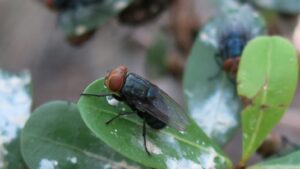
Bloomberg’s Jason Gale reported that “New World screwworms (Cochliomyia hominivorax) are parasitic flies that lay eggs in the wounds of warm-blooded animals. The larvae burrow into living tissue — like a screw twisting into wood — causing severe damage and, if untreated, death. Most infestations strike cattle, wildlife and pets, but humans can occasionally be affected. Treatment involves removing the larvae and disinfecting the wound. Caught early, it’s usually successful, though extracting hundreds of maggots can be arduous.”
“For the general public, the risk of infection in the US is very low,” Gale reported. “…The bigger concern is for cattle and other animals, where screwworm can spread rapidly and kill even fully grown livestock in as little as 10 days if untreated, according to the UN Food and Agriculture Organization. After a case was detected 370 miles south of the US-Mexico border in July, the US closed southern ports of entry to livestock. Earlier detections less than 700 miles from the border had already triggered restrictions on Mexican cattle, bison and horses in May.”
How is the USDA Addressing New World Screwworm?
NBC News’ Patrick Smith reported that “U.S. Secretary of Agriculture Brooke L. Rollins traveled to Texas to announce a five-part plan to combat the screwworm on Aug. 15. This includes plans to breed billions of sterile flies and dump them from the air over southern Texas and Mexico in the hope of stopping the parasite’s spread.”
“The sterilized male flies mate with females, but the eggs don’t hatch,” Smith reported. “Eventually, the population reduces and dies out. This technique worked in the 1960s when the U.S. suffered its last screwworm outbreak.”
“And the federal government may face calls to accelerate its work on this: When first announced in June, the sterilization plan wasn’t due to be operational for ‘two to three years,’” Smith reported. “Texas Gov. Greg Abbot, commenting on the federal government scheme, said the state agriculture industry, with its 2 million jobs, was worth $867 billion. ‘All of this is at risk because of the New World screwworm.’”