Reuters’ Ella Cao and Naveen Thukral reported that “China’s state-owned COFCO bought three U.S. soybean cargoes, two trade sources said, the country’s first purchases from this year’s U.S. harvest, shortly before a summit of leaders Donald Trump and Xi Jinping.”
“As the two nations battle over trade tariffs, the lack of Chinese buying has cost U.S. farmers billions of dollars in lost sales, after they largely supported Trump in his campaigns for president,” Cao and Thukral reported. “Although COFCO’s deal for December-January shipment of about 180,000 metric tons of soybeans was China’s first such buy in months, traders do not expect a significant resumption in demand for U.S. cargoes after recent large South American purchases.”
“‘COFCO has proceeded to purchase U.S. beans even before the two leaders have reached a trade agreement,’ said a trader at an international trading company that supplies Chinese crushers,” Cao and Thukral reported. “‘The volumes booked by COFCO are not that large, three cargoes for now.'”
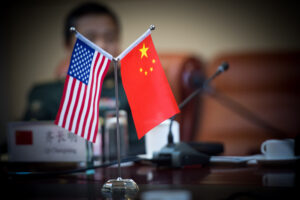
“The prime U.S. soybean export season normally runs from October through January, but China has shunned soybeans from the autumn U.S. harvest this year, amid protracted trade friction with Washington, turning instead to South American suppliers,” Cao and Thukral reported.
Chinese Demand for US Soybeans Likely Not Huge
Bloomberg’s Hallie Gu and Alfred Cang reported that “grains traders have been optimistic that China and the US would reach an agreement this week on agricultural products, prompting a rise in soybean prices in Chicago. However, they remain cautious about how much American soy China will actually buy this season.”
“It’s unclear if China will commit to fixed volumes of US soybeans, and there’s uncertainty over how any deal would be implemented,” Gu and Cang reported. “With Chinese soymeal prices still weak, even a rollback of tariffs to pre–trade war levels may not make it profitable for Chinese crushers to take American beans, the people said.”
Cao and Thukral reported that “China, which takes more than 60% of world soybean imports, has nearly completed booking cargoes from Brazil and Argentina through November, with limited purchases expected for December and January ahead of the Brazilian harvest.”
Today’s purchase by China of multiple ships of American soybeans signals @POTUS’ strong dealmaking and a positive step forward for our farmers.
This purchase, coming directly ahead of the Trump-Xi talks, shows that America means business and that we will restore balance, give…
— Secretary Brooke Rollins (@SecRollins) October 29, 2025
“Private Chinese buyers tend to prefer Brazilian soybeans for their higher protein content, which typically brings a premium over U.S. soybeans, said Jeffrey Xu, general manager of Shanghai-based OCI, a soybean consultant and two other traders,” Cao and Thukral reported. “Still, China could take about 8 million tons of U.S. soybeans for its strategic reserves in the period from December to May, traders said, buying through state-owned enterprises such as Sinograin, which would be worth roughly $4 billion.”
Trump, Xi Planning Meeting this Week
CNBC News’ Anniek Bao reported that “U.S. President Donald Trump said he expects to lower fentanyl-linked tariffs on China as Beijing confirmed a high-stakes meeting between Chinese President Xi Jinping and the American leader. A spokesperson for Chinese Foreign Ministry said Wednesday that Xi will meet Trump in Busan, South Korea, on Thursday to exchange views on issues of shared concerns, without elaborating.”
“Earlier on Wednesday, Trump told reporters aboard the Air Force One that fentanyl flows into the U.S. and ‘farmers’ will be among topics he expects to discuss with Xi on Thursday,” Bao reported. “The two leaders’ meeting — their first in-person sit-down since Trump’s return to the office in January — comes as bilateral tensions have escalated in recent weeks. Beijing has turned up the heat on rare earth export controls, while Washington has retaliated with port fees on Chinese ships and threatened software-related export restrictions.”