Agri-Pulse’s Oliver Ward and Kim Chipman reported that “President Donald Trump and senior officials said Monday that the administration will provide $12 billion in financial support for farmers, with the first $11 billion going to row crop producers before the end of February 2026.”
“‘This relief will provide much-needed certainty to farmers as they get this year’s harvest to market and look ahead to next year’s crops,’ Trump said during a roundtable at the White House Monday afternoon to announce the assistance,” Ward and Chipman reported. “The president was joined by Agriculture Secretary Brooke Rollins, Treasury Secretary Scott Bessent, Senate Agriculture Committee Chair John Boozman, R-Ark., and Sens. John Hoeven, R-N.D., and Deb Fischer, R-Neb, as well as Rep. Austin Scott, R-Ga., and a group of farmers, for the announcement.”
“The first $11 billion will go to row crops to serve as a ‘bridge payment’ until the ‘new golden age’ when farmers can support themselves without relying on government assistance, Rollins said during the roundtable,” Ward and Chipman reported. “Rollins added that the money will begin to be distributed by Feb. 28 next year and assured growers that they would have an indication of the size of their forthcoming payments before the new year.”
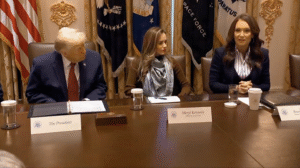
“When farmers approach lenders to borrow money and begin making plans for the next planting season, ‘you will have that number in hand,’ Rollins said during Monday’s roundtable,” Ward and Chipman reported. “The last $1 billion, Rollins said, will eventually be awarded to specialty crop producers. But Rollins said that the administration is still working ‘to best understand where they are in the farm economy.’ USDA says sugar producers could also see payments from this funding.”
“During the roundtable, Trump suggested that tariffs would fund the assistance, but Rollins clarified to reporters after the event that the funding would come from the Commodity Credit Corporation – the same vehicle Trump used to fund trade assistance during his first term,” Ward and Chipman reported. “‘The tariffs we consider an offset,’ Rollins told reporters.”
How the Bridge Aid Payments Will be Calculated
Progressive Farmer’s Chris Clayton reported that “FBA payments will provide aid to the primary commodity crops: barley, chickpeas, corn, cotton, lentils, oats, peanuts, peas, rice, sorghum, soybeans, wheat, canola, crambe, flax, mustard, rapeseed, safflower, sesame and sunflower.”
“USDA will use a ‘uniform formula to cover a portion of modeled losses during the crop year,'” Clayton reported. “USDA will use Farm Service Agency-reported planted acres for crops. Because of that, USDA stated that farmers need to ensure their 2025 acreage reporting is correct by 5 p.m. ET on Dec. 19. USDA also will develop its payment formula using Economic Research Service cost of production estimates along with World Agricultural Supply & Demand Estimate yields and prices.”
.@SecRollins: As @POTUS said, we are very pleased to announce that today, we are going to be effectuating a $11B bridge payment to our farmers… by the end of this month, every farmer that is able to apply for it will know exactly what that number looks like. https://t.co/3cKmFw6OQC pic.twitter.com/hUk5XFmVMd
— Rapid Response 47 (@RapidResponse47) December 8, 2025
“Commodity-specific payment rates will be released at the end of December,” Clayton reported. “USDA also noted, ‘Crop insurance linkage will not be required for the FBA program.’ Still, USDA encouraged farmers to use crop insurance, which has new incentives and protections under the One Big Beautiful Bill Act. USDA will have pre-filled applications for FBA. In a press call, USDA officials also said the program will have a $155,000 payment limit. Producers or legal entities also will have an adjusted gross income cap of $900,000.”
Farm Groups, Politicians React
Successful Farming’s Mariah Squire reported that “farm groups were quick to respond to the announcement. Although most praised the move, the Center for American Progress (CAP) called it ‘nothing more than a band-aid that would not be necessary if [Trump’s] trade policies had not failed American farmers and ranchers.'”
“AFBF President Zippy Duvall commented on the announcement Monday,” Squire reported. “‘Farmers are grateful to President Trump and Secretary Brooke Rollins for providing resources that, for many, could make the difference between staying in business to plant another crop, or shuttering a family farm. …We appreciate that Congress addressed many economic challenges in legislation earlier this year, but many farm program improvements will not kick in until next year. The assistance announced today will make an immediate impact by providing a lifeline for farmers who work to ensure a healthy, safe, and abundant food supply.'”
The critical assistance announced today will help farmers obtain financing for 2026 and serve as a bridge to the long-term improvements to the farm safety net, which were included in the One Big Beautiful Bill. pic.twitter.com/6C05d96CuU
— House Committee on Agriculture (@HouseAgGOP) December 8, 2025
“In a statement Monday, (the American Soybean Association) ‘expressed gratitude’ to the Trump administration,” Squire reported. “‘We appreciate the administration’s attention to the challenges farmers continue to face in today’s market,’ said ASA President Caleb Ragland, Kentucky farmer. ‘While we await additional details, we believe the Farmer Bridge Assistance Program is a positive first step to restore certainty as soybean farmers market this year’s crop and plan for the 2026 planting season.'”
Ward and Chipman reported that “Democrats were already branding the assistance package as a ‘tariff bailout’ before the Monday afternoon roundtable had concluded. The Democratic National Committee cited comments from a Cornell University economist warning that government assistance will only provide limited short-term relief without making farmers whole or addressing a growing trade problem.”