Progressive Farmer’s Russ Quinn reported that “farmers could see even higher fuel and fertilizer costs for this spring with the start of the military conflict between the U.S. and Israel against Iran in the Middle East.”
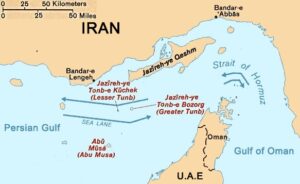
“The now closed Strait of Hormuz moves about 20 million barrels of crude oil and other petroleum products each day, which is about 20% of global demand. Diesel futures prices moved to a two-year high on Monday,” Quinn reported. “Fertilizer exports also move through the Strait. About a quarter of the globally traded nitrogen market moves through the waterway, according to a fertilizer analyst.”
“As a result, nitrogen fertilizer at the port of New Orleans has seen an increase in price this week,” Quinn reported. “Urea prices for barges in New Orleans traded $520/ton to $550/ton on Monday, up from an average of $475/ton last week, according to CRU Group.”

AgWeb’s Michelle Rook reported that “fertilizer prices were already at historical highs prior to the conflict. (Josh) Linville (vice president of fertilizer for StoneX) reports urea markets saw the sharpest increases, followed by phosphate.” …’We have had prices up about $70 a ton from Friday afternoon trade. It’s been significant,’ Linville says. UAN and anhydrous prices have not reacted as violently, but phosphate values are not far behind.”
“‘Phosphate, we’ve got that price up about $30 a ton from the last trade we had seen. Again, [I’m] a little surprised it’s not up more. That’s, I guess, a thankful thing that’s not up more, but I think more increases are coming. Really, the only major fertilizer that hasn’t been impacted so far is potash. But you can even make a case for that given Israel and Jordan’s importance,’ he adds,” according to Rook’s reporting.
Fertilizer Supply Could be an Issue, too
Rook reported that “higher prices aren’t the only problem: Supply is in jeopardy. Linville says, from a timing standpoint, it could not be worse for agriculture. A multi-week conflict could keep some supply from getting to the U.S. in time for spring planting.”
“‘It takes 30 days to get a vessel of urea to load in the Persian Gulf, sail it over here, hit U.S. shores, and then another three to four weeks to move that product into the interior of the nation to a point where the farmer can put their hands on it,’ Linville says,” according to Rook’s reporting. “This means a vessel loading today might not be available until May 1. The window for spring application is closing quickly.”
“While healthy fertilizer import volumes in February provide some cushion, the industry could see a shift in acreage,” Rook reported. “Some farmers may move from corn to soybeans if nitrogen supplies do not arrive in the Corn Belt in time.”
Trump Admin to Offer Escorts Through Strait of Hormuz
Politico’s Ben Lefebvre and Jack Detsch reported that “the White House will offer naval escorts and political risk insurance for oil and gas tankers traversing the Strait of Hormuz, President Donald Trump said Tuesday, in a bid to cool energy prices that have surged since Iran warned it would attack ships at the choke point.”
“The announcement brought some immediate relief to the overheated crude oil market, curbing the rally that had added more than $10 a barrel of oil since the U.S. and Israel began launching strikes against Iran on Saturday,” Lefebvre and Detsch reported. “Still, energy markets remain nervous that key oil and gas assets in the Persian Gulf may be targeted by Tehran.”
“‘Effective IMMEDIATELY, I have ordered the United States Development Finance Corporation (DFC) to provide, at a very reasonable price, political risk insurance and guarantees for the Financial Security of ALL Maritime Trade, especially Energy, traveling through the Gulf,’ Trump said in a Truth Social post,” according to Lefebvre and Detsch’s reporting. “‘This will be available to all Shipping Lines. If necessary, the United States Navy will begin escorting tankers through the Strait of Hormuz, as soon as possible.'”
Linville said on X that there are “no guarantees” the Trump administration’s assurances to provide safe passage to ships through the Strait of Hormuz “will work but if it does, it could limit the damage to fertilizer and could have corrections coming. Timing is everything.”