Reuters reported that “the U.S. House passed legislation on Wednesday that would allow nationwide year‑round sales of gasoline containing 15% ethanol, handing a major win to biofuel producers and farm groups while raising concerns among refiners about higher compliance costs.”
“The H.R. 1346 bill, or the Nationwide Consumer and Fuel Retailer Choice Act, approved by a vote of 218 to 203, would permit fuel retailers to offer E15 year‑round, removing seasonal restrictions linked to smog concerns,” Reuters reported. “…Supporters say allowing year-round E15 sales would expand biofuel demand and help lower fuel prices that have spiked since the start of the Iran war. Critics argue it risks raising costs for refiners already facing higher compliance burdens under federal biofuel mandates.”
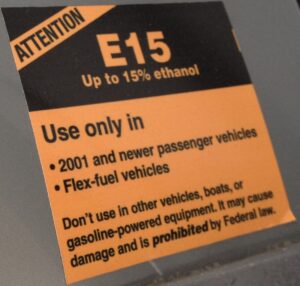
Progressive Farmer’s Todd Neeley reported that “Rep. Frank Pallone, D-N.J., said during an hour debate that the current state of the economy with rising gasoline prices and continued inflation essentially led him to vote for the bill. …Rep. Mariannette Miller-Meeks, R-Iowa, said it makes sense to pass the bill, considering the EPA has granted summer waivers to allow E15 sales to continue since 2011. ‘That means Washington already recognizes that this policy makes sense,’ she said.”
Politico’s Grace Yarrow reported that “the proposal (now) faces an uphill battle in the Senate due to entrenched opposition from oil-state lawmakers.”
“‘God only knows’ what will happen to the E15 bill in the Senate, said one agriculture lobbyist who was granted anonymity to discuss the negotiations. A Republican Senate staffer who was granted anonymity to discuss the legislation’s political dynamics called the House proposal a ‘nonstarter,'” Yarrow reported. “‘It won’t pass in the Senate. I feel very confident about that,’ said the staffer, who works for a lawmaker who opposes the plan. The legislation also faces significant opposition from a wide array of interest groups.”
“Oil-refining companies say the bill doesn’t do enough to cut potential compliance costs. Environmental organizations warned that boosting ethanol demand would disrupt U.S. crop allocations while harming the climate and consumers,” Yarrow reported. “A Congressional Budget Office analysis determined the bill would add billions of dollars to the federal deficit over a 10-year period.”
FAPRI Analysis Finds E15 Bill Could Boost Corn Prices and Pressure Soybeans
Before the vote on Wednesday, a study from the University of Missouri’s Food and Agricultural Policy Research Institute (FAPRI) was released, AgWeb’s Tyne Morgan reported, showing that “while there are positives for ethanol and corn demand, the report also highlights some clear tradeoffs, especially for soybean oil, biodiesel and even short-term farm income as soybeans could be negatively impacted by the House’s legislation.”
“According to FAPRI Director Seth Meyer, the study’s clearest takeaway is that year-round E15 alone doesn’t dramatically reshape the farm economy in the near term, but proposed changes to small refinery exemptions could pressure farm income while increasing government spending,” Morgan reported. “Meyer says the headline is pretty straightforward. The biggest market disruptions in the analysis don’t actually come from allowing year-round E15 sales. Instead, the larger economic consequences show up when the House proposal to reduce SRE reallocations gets layered into the equation.”
“‘The key of the report is that E15 itself is not, at least in the short term, a major disruption to the market in terms of producer incomes or government costs,’ Meyer says,” according to Morgan’s reporting. “‘It becomes mostly a tradeoff between corn and soybeans.'”
Agri-Pulse’s Kim Chipman reported that the report showed that the E15 bill “would mean ‘higher demand for corn and lower demand for soybean oil and soybeans’ due to how the RFS is structured, according to the research co-authored by Seth Meyer, who oversees FAPRI and until last year served as the USDA’s chief economist.”
“The findings prompted the American Soybean Association to privately advise its membership that it can’t support the current E15 bill,” Chipman reported. “‘After reviewing the FAPRI study, ASA issued a member-only communication summarizing the data,’ an ASA spokesperson told Agri-Pulse. ‘Based on the study’s findings, we advised ASA members that we could not support the legislation in its current form. However, ASA has not yet taken a public position on the legislation.'”
ASA Statement on House Passage of Year-Round E15 Legislation: pic.twitter.com/bbewbGSF6c
— American Soybean Association (@ASA_Soybeans) May 13, 2026
However, Chipman reported that “the National Corn Growers Association said the FAPRI study is flawed because it didn’t factor in the historically high 2026-27 biofuel-blending rules set by the Trump administration in March, and because it assumes slower E15 adoption than industry projections.”
CBO Estimates E15 Bill Would Increase Federal Deficit by $2.27 Billion
Progressive Farmer’s Neeley reported that “the Congressional Budget Office said in an analysis of the legislation that it would increase the federal deficit by $2.27 billion in the next 10 years. Allowing E15 sales year-round would increase demand for corn-based ethanol, increase demand for corn and modestly raise corn prices, according to the CBO. It also found the bill would reduce federal payments from USDA commodity programs and reduce direct spending on agriculture subsidies.”
“CBO said that because ethanol has lower energy content than gasoline, higher ethanol blends would lead to slightly more gasoline consumption and increase revenues from the federal excise tax on gasoline,” Neeley reported. “It also said year-round E15 nationally would increase claims on the 45Z Clean Fuels Production tax credit, also contributing to increased revenues.”
“CBO estimates that HR 1346 would reduce direct spending on crop insurance by $1.3 billion in 10 years,” Neeley reported. “The CBO said the proposed changes to the Renewable Fuel Standard that would prohibit the U.S. Environmental Protection Agency from reallocating biofuels volumes to other refineries could significantly reduce demand for biomass-based diesel. That, in turn, could depress soybean prices.”
“The CBO said there would be considerable budget uncertainty from the legislation, depending on how quickly consumers and retailers adopt E15, the actual volume of small-refinery exemptions and unpredictable prices changes on commodities including corn and soybeans,” Neeley reported.