



The Supreme Court in a 7-2 decision on Thursday said Bayer cannot be sued over state-level claims that the company failed to warn of cancer risks from its weedkiller Roundup…
New World Screwworm Found 31 Miles from US Border
Reuters’ Heather Schlitz reported that “a devastating parasitic fly that eats warm-blooded animals alive and could cause millions of dollars in economic damage to the U.S. economy has been found in a young sheep in Mexico within 31 miles (50 km) of the U.S. border, the U.S. Department of Agriculture reported on Friday.”
“The detection heightens the risk for America’s beef industry and cattle producers, who have feared for more than a year that the pest would cross into the U.S. and infect livestock after spreading northward in Mexico,” Schlitz reported. “This latest detection of the fly, New World Screwworm, was in a six-month-old sheep in Mexico’s Coahuila state, according to USDA data. It was the closest the parasite has come to the U.S. during the most recent outbreak, despite a sprawling effort by USDA and Mexico to contain the pest.”
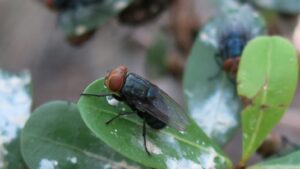
Meatingplace’s Peter Voskamp reported that “as of May 25, the USDA reports nearly 2,000 active NWS cases in Mexico, with dozens of those less than 100 miles from the Texas border. Authorities in both countries are currently deploying more than 100,000 sterile male flies per week into the active NWS; that number is expected to reach 500,000 sterile flies in the near future.”
USDA Opens Lab to Help Combat Screwworm and Other Pests
Voskamp reported that “the USDA’s Agricultural Research Service (ARS) (last) week announced the opening of the Knipling-Bushland Livestock Insects Research Laboratory to ‘provide the U.S. cattle industry with innovative tools and advanced technologies to manage and eliminate the invasive fly and tick pests that threaten the U.S. cattle industry.’”
“The new 52,000‑square‑foot, state-of-the-art facility in Kerrville, Texas, will serve to ‘improve the health, sustainability, and profitability of U.S. livestock production and protect the U.S food supply from devastating arthropod pests, including biting flies, ticks, and the New World screwworm’ while also pursuing the eradication of ‘ticks and blood feeding flies that can harm, infect and kill cattle,'” Voskamp reported.
“The lab’s debut comes while authorities in both the United States and Mexico are battling the resurging New World screwworm (NWS), a fly-borne scourge that can wreak havoc on beef cattle herds, which had been eliminated from much of North America in the 1970s,” Voskamp reported.
Southern States Still Expect Screwworm to Reach U.S.
Stateline’s Kevin Hardy reported that “southern states are bracing for a potential invasion of the New World screwworm that could disrupt livestock markets and raise already high meat prices.”
“With multiple cases reported within 100 miles of the U.S.-Mexico border, the federal government has already banned the import of live cattle from Mexico, compounding the shortage of domestic beef,” Hardy reported. “State and federal officials also have created new monitoring, testing and quarantine protocols even as the feds put in place measures to sterilize millions of flies — including a $750 million new facility that will produce sterile flies.”
“‘It’s going to be very challenging, I think, at this point to keep it out of the United States,’ said Dr. Samantha Holeck, state veterinarian with the New Mexico Livestock Board, which regulates the livestock industry,” Hardy reported. …David Anderson, professor and extension specialist in livestock and food product marketing at Texas A&M University “said beef producers appear well prepared to fight a domestic screwworm invasion, which many view as an inevitability. ‘I think we will re-eradicate it. I think it just depends on how much time it takes us to do that,’ he said.”
“In the case of an outbreak, USDA has created monitoring, reporting and quarantine protocols for animals. But because the disease does not create food safety concerns, the agency will not stop any movement of animal products, including meat,” Hardy reported. “But the infestation could ripple to other animal products, livestock and even pets, officials warn.”
