



US soybean buys by China have picked up following a summit between Trump and President Xi Jinping in May, putting this year’s purchases roughly a quarter of the way toward…
Russia-Ukraine War Surge Again Disrupting Black Sea Grain
Reuters’ Jonathan Saul reported that “a surge in attacks on ships, ports and export terminals in the Black Sea is disrupting global supplies of grain and oil, turning the region into the latest strategic trade chokepoint to be hit by escalating conflict.”
“The Black Sea is a vital route for shipments of grain, crude oil and refined products. Its waters are shared by Russia and Ukraine as well as Bulgaria, Georgia, Romania and Turkey,” Saul reported. “Russia, the world’s largest wheat exporter, and Ukraine, also a major agricultural exporter, have intensified attacks on each other’s agricultural export facilities and commercial vessels in the Black Sea area in recent weeks. Kyiv has also ramped up attacks on tankers involved in Russia’s oil trade.”
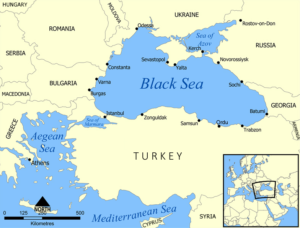
“Ukraine recorded 35 attacks on vessels in port and 22 at sea in July, along with 67 strikes on port facilities, according to the infrastructure ministry,” Saul reported. “By comparison, vessels were attacked 14 times in all of 2025. Reuters estimates Ukraine has targeted dozens of tankers involved in Russia’s oil trade.”
“Agricultural products remain Ukraine’s largest source of export revenue more than four years into the war. Kyiv is seeking alternative export routes, but Agriculture Minister Taras Vysotskyi told Reuters this week they would not reach full capacity until the end of August and would handle only about half the volumes normally shipped through Black Sea ports,” Saul reported. “Shipping activity in the Sea of Azov, which leads into the Black Sea, has been restricted since July 10, impacting activity at the major Russian grain port of Taman, trade sources said. Grain exports continue from Novorossiysk and Tuapse, but at a slower pace than before.”
Ukraine Cuts 2026-27 Grain Export Forecast
Bloomberg’s Pyotr Kozlov reported that “Ukraine’s agricultural shipments could fall by more than half this season after Russian attacks disrupted Black Sea ports, threatening the country’s biggest source of export revenue.”
“The country may export about 29.6 million tons of agricultural products in the 2026-27 marketing year, down 54% from an earlier estimate of 64.4 million tons, according to Ukraine’s Agriculture Ministry,” Kozlov reported. “Wheat exports could plunge 53% to 8.3 million tons from a previous forecast.”
Russia and Ukraine are both losing grain export capacity because of Black Sea attacks – and recently, both sides put out dramatic loss estimates.
Russia’s Grain Exporters Union: #wheat exports could fall short by 30-35 mmt.
Ukraine’s Ag Minister: over 30 mmt of #grain and… pic.twitter.com/gtnRhcsaRD
— Andrey Sizov (@sizov_andre) August 10, 2026
“The export bottleneck is creating pressure as the new harvest fills storage facilities and weighs on domestic prices,” Kozlov reported. “Ukraine’s roughly 59 million tons of grain storage capacity could be full by early November, with a deficit of about 11 million tons by the end of autumn.”
Russian Wheat Exports Could Hit Multi-Year Low
MarketScreener reported that “Russian wheat exports in August could fall to 3-3.4 million metric tonnes from 4.5 million tonnes a year ago, the lowest level since the 2016/17 season, the Sovecon agriculture consultancy said on Tuesday. Russia is the world’s largest wheat exporter, but harvesting delays, low prices and shipping disruptions linked to security risks in the Black Sea have been weighing on exports.”
“‘Low export rates are increasing pressure on the domestic market,’ Sovecon head Andrey Sizov said,” according to MarketScreener’s reporting. “On Monday, Sovecon put last week’s prices for Russia’s new-crop wheat with 12.5% protein at $224 to $226 a ton, compared with $228 to $230 the previous week.”
Wheat Futures Rise Nearly 25% Above January 2026 Levels
IFPRI’s Joseph Glauber reported that “after peaking in early 2022 following the Russian invasion of Ukraine, wheat prices have fallen over most of the past four years. This year’s U.S.-Israeli attacks on Iran and subsequent closure of the Strait of Hormuz sent energy and fertilizer prices soaring but had a relatively small impact on grain prices—grain exports were relatively unaffected, and fertilizer impacts are not likely to affect grain production for several months.”
“But now, wheat prices are on the rise again,” Glauber reported. “Widespread drought has affected crop conditions in the Northern Hemisphere, and increased tensions in the Black Sea are again threatening wheat supplies. As a result, wheat prices have increased almost 25% above their January 2026 levels, reaching their highest levels in two years.“
