The Wall Street Journal’s Adriano Marchese reported that “President Trump is signaling a potential agreement to purchase lower-priced potash from Belarus, a move that could challenge Canadian exporters.“
“In a Monday post on Truth Social, Trump said he is working on a ‘massive deal’ aimed at lowering fertilizer costs for American farmers and ranchers,” Marchese reported. “The proposal targets a market currently dominated by Canada, the world’s largest producer of potash, a vital fertilizer component and an essential plant nutrient with no substitute in global food production.”
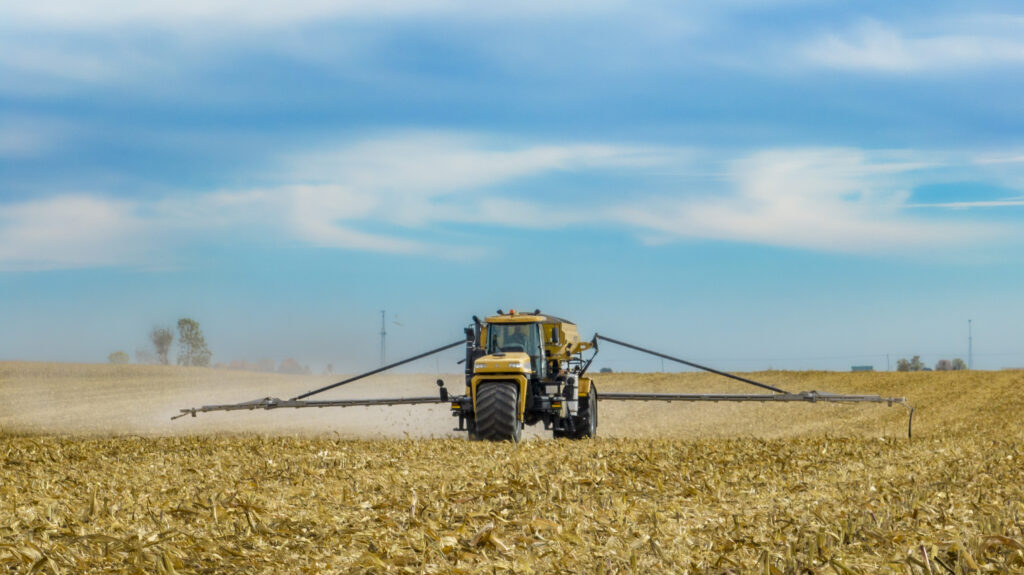
Agri-Pulse’s Olivia M. Bridges reported that “fertilizer costs are on the rise because of a number of factors, including the war with Iran and tariffs, among other reasons. The average cost for red potash fertilizer is $690 per ton, while white potash fertilizer is $744.17 per ton, according to USDA’s Sept. 18 bi-weekly Pacific Northwest production cost report. This is a jump compared to last year. The same USDA report from Sept. 22, 2025, found that red potash fertilizer cost $670 per ton and white potash fertilizer cost $695.84.”
“…It’s not immediately clear why Trump landed on Belarus for the potash deal,” Bridges reported. “The U.S. has had a limited presence in Belarus since 2008, the Congressional Research Service said in a January report. The second Trump administration has scaled up engagement.”
Belarus Says No Potash Available for Shipping
The Hill’s Laura Kelly reported that “Belarus’s authoritarian leader Alexander Lukashenko said Monday that there are no available volumes of fertilizer to send to the U.S. This came after President Trump announced that he was working on a ‘massive Deal’ to buy potash from Minsk at a steep discount amid the trade war with Canada.”
“‘Even if we wanted to supply [potash] to other, Western markets, we simply do not have those volumes — everything is contracted,’ Lukashenko said in remarks published by his office on Monday,” according to Kelly.
Additionally, Bloomberg’s Milda Seputyte reported that “Lithuania signaled its ports will remain closed for shipments of Belarusian potash, potentially stymieing what US President Donald Trump called a ‘massive deal’ on buying the fertilizer.”
“Foreign Minister Kestutis Budrys said on Tuesday his country sees ‘no grounds’ for reviewing the European Union sanctions on Minsk, which include a ban on the transit of Belarusian-extracted fertilizer across the EU territory,” Seputyte reported. “Lithuania would have been the most viable transit route for Belarusian potash after Trump announced on Monday that the US is working with Minsk to secure more supplies amid a trade dispute with Canada.”
Experts Expect Limited Price Impact
Reuters reported that “fertilizer analyst Josh Linville of StoneX said he doubts Belarusian potash will play a major role in either supplies for US farmers or in lowering prices that they presently pay.“
“‘I’m afraid the impact would be limited. We have not struggled to find potash,’ he said,” according to Reuters’ reporting. “‘We have more than enough to go around. It is phosphate and nitrogen that we need help with.'”
“Even if Lithuania opened its port of Klaipeda to Belarusian potash exports, the relatively low current value of potash makes it hard to justify exports through the Baltic and across the Atlantic Ocean, Linville said,” Reuters reported.
