Farm News Media’s Dennis Rudat reported that “USDA’s Farm Service Agency estimates Agriculture Risk Coverage (ARC) and Price Loss Coverage (PLC) will generate approximately $13.8 billion in gross payments to eligible agricultural producers for the 2025 crop year — the largest annual payout by far since the key safety net programs were established in the 2014 Farm Bill.”
“In an Oct. 7 notice to state and county FSA offices, Deputy Administrator of Farm Programs Jared Hagert advised staff that USDA had begun processing 2025 ARC/PLC payments and that they would start being released into USDA’s web-based National Payment Service (NPS) for County Offices to certify and sign,” Rudat reported. “… In a follow-up email to Michigan Farm News, USDA confirmed that ‘producers can expect to see payments begin to hit bank accounts early next week, assuming all documentation is properly filed at the FSA office.'”
American Ag Network’s Jesse Allen reported that USDA Under Secretary for Farm Production and Conservation Richard “Fordyce said much of the increase (in ARC and PLC payments) traces back to the Working Families Tax Cuts Act, which raised statutory reference prices, and he reminded producers that the payments arrive on a delay.”
“‘I always have to remind people that ARC and PLC are a year delayed,’ Fordyce said. ‘So we’re paying this October the ARC and PLC payments for the 2025 crop,'” Allen reported. “The law also raised the payment limit from $125,000 to $155,000, with annual adjustments for inflation. The limit for the 2025 crop year is $160,000. Fordyce said the combination of higher reference prices and a higher limit pushes the headline number up, but it is a gross figure.”
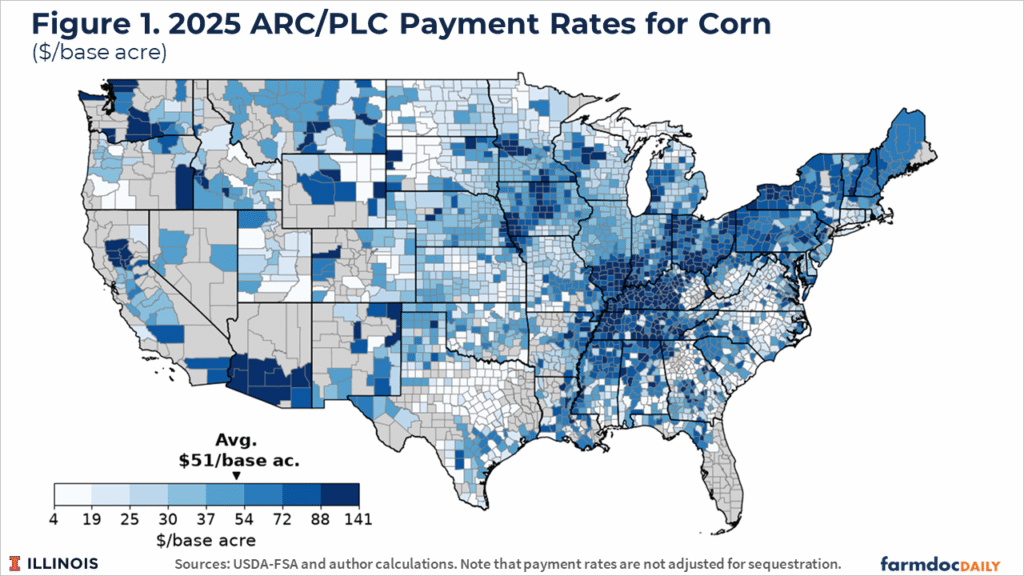
AgWeb’s Tyne Morgan reported that “the payments will vary by state and county, but University of Illinois economists with farmdoc daily, working with colleagues at the University of Minnesota and Ohio State University, published their estimates now that USDA has released marketing year average prices for nearly all eligible commodities.”
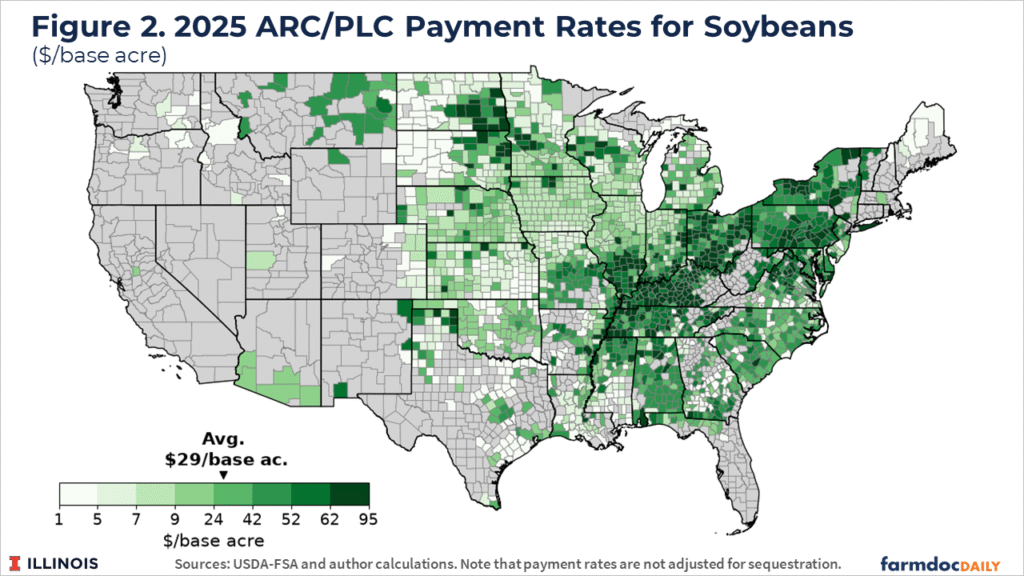
“According to their estimates, corn payments are projected to average $51 per base acre, down from $62 in the original forecast,” Morgan reported. “Soybeans are estimated at $29 per base acre. Wheat at $47 per acre. Seed cotton comes in at $119 per base acre, and peanuts at $244.”
ARC & PLC Payments Won’t Fully Offset Higher Costs
Progressive Farmer’s Chris Clayton reported that “the ARC/PLC payments can offset some of the increase in diesel prices, but the payments won’t make up for overall higher expenses for the 2026-27 crop. USDA forecast that fertilizer, fuel, marketing, storage and transportation costs account for $11.1 billion in higher costs for 2026. Overall, total production expenses for 2026 are forecast at $492.8 billion, up $21.2 billion from last year, a 4.5% increase.”
“Farmers in some states will bear the higher fuel costs without much comparable support,” Clayton reported. “Farmers in California, for instance, face the highest fuel costs in the country, but many of the state’s specialty crop producers don’t have access to ARC/PLC payments. California farmers are projected to receive $242.6 million in ARC/PLC payments while diesel costs will be at least $1.19 billion. That translates into a -$947.4 million disparity.”
USDA Also Issuing $1.8 Billion in CRP Payments
The Hagstrom Report’s Jerry Hagstrom reported that “the Agriculture Department late Thursday announced it is issuing approximately $1.8 billion in Conservation Reserve Program and Grassland CRP payments to agricultural producers and landowners who idle their land to achieve conservation goals in 2026.”
“These payments include Grassland CRP payments that play an important role in the Trump administration’s Ranchers First Initiative to rebuild the cattle herd, Agriculture Secretary Brooke Rollins said in the announcement,” according to Hagstrom’s reporting. “‘As we continue to work to rebuild the American cattle herd, today’s announcement will help continue this effort by protecting nearly 1 million acres of grazing land for our ranchers,’ Rollins said.”
