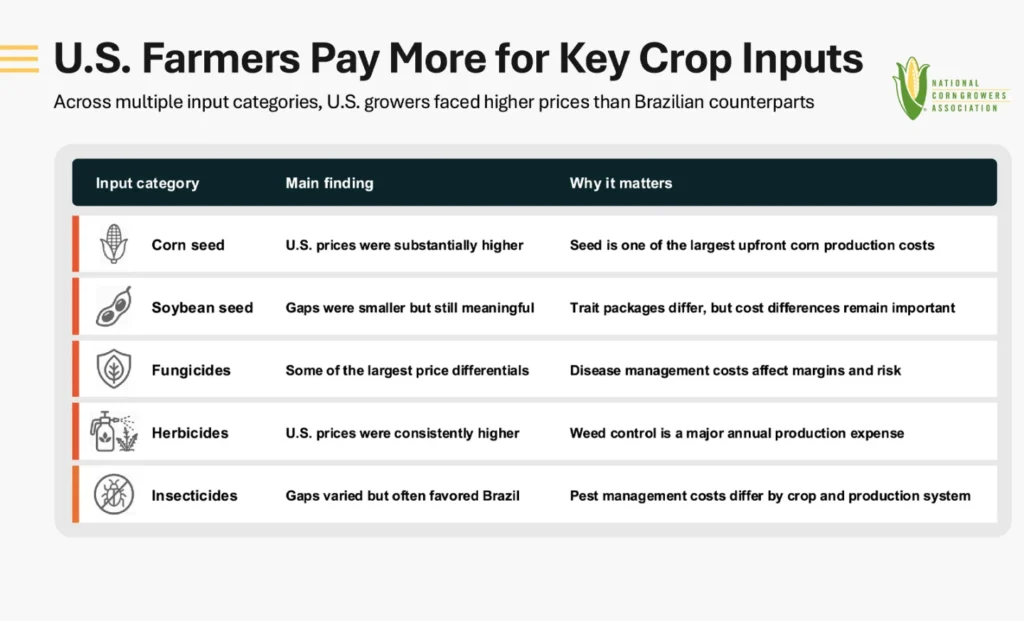
- U.S. corn seed prices averaged 68% higher than Brazil’s
- U.S. corn insecticide prices averaged 87% higher
- Some fungicides cost more than double what Brazilian farmers paid
- Many herbicide comparisons also approached double Brazilian price levels”
Paying an Input Premium Only to Sell at Same Cost
Progressive Farmer’s Chris Clayton reported that, “‘we’re paying far more for our inputs, and yet we’re selling our products for the same price,’ said Matt Frostic, a Michigan farmer and NCGA’s first vice president.” “U.S. farmers pay a premium for corn seed, fungicide, herbicide and some insecticides,” Clayton reported. “The price differences ‘are substantial enough to affect farm profitability and long-term competitiveness,’ the report stated.” “There are also differences in product availability that factor into the price gap, the study stated,” Clayton reported. “Brazilian farmers have more access to lower-cost products with single active ingredients and generic products. The U.S. market has more premium premixes and products from the major global manufacturers.” “Frostic noted when a committee was formed last year to look at input prices, he said the industry was in a ‘state of crisis,’ a characterization some people questioned at the time,” Clayton reported. “Having more research to back up that claim, he said, should help push for more transparency in input pricing. Frostic said NCGA is still getting pushback from the industry over the group’s focus on input prices.”Input Cost Effects Global Competitiveness, Frustrates Farmers
AgDaily’s Ryan Tipps reported that, “‘corn farmers are on track to lose money for a fourth consecutive year,’ Frostic said during Tuesday’s media call. ‘We certainly want to see higher prices for our corn, and NCGA works every day on building that demand, but we can’t ignore the prices we’re paying for inputs right now.’‘We certainly want to see higher prices for our corn, and NCGA works every day on building that demand, but we can’t ignore the prices we’re paying for inputs right now.’“He added that corn growers are frustrated by companies using trade remedy laws — such as 2021’s countervailing duties on imported phosphate or, more recently, duties on imported supplies of glyphosate — to consolidate their market share and increase prices even further,” Tipps reported. Michigan Farm News reported, “NCGA Chief Economist Krista Swanson said the research demonstrates how higher input costs impacts global competitiveness for U.S. producers.” “‘It’s easy to focus on corn prices when talking about the farm economy, but that misses a big part of the story,’ Swanson said,” Michigan Farm News reported. “‘The other side of the equation is what farmers are paying to put a crop in the ground, and those costs have kept climbing to levels that are becoming unsustainable.’”