Reuters’ P.J. Huffstutter reported that “U.S. Agriculture Secretary Brooke Rollins said on Wednesday that the Department of Agriculture is preparing to reopen the Santa Teresa, New Mexico, port of entry at the U.S.-Mexico border.“
“The agency said that operations will start slowly with an initial limit of 750 head of cattle per day,” Huffstutter reported. “The USDA in late August resumed cross-border livestock trade with Mexico under a phased port reopening that began in Douglas, Arizona, after months of closures due to concerns about the spread of the screwworm parasite.”
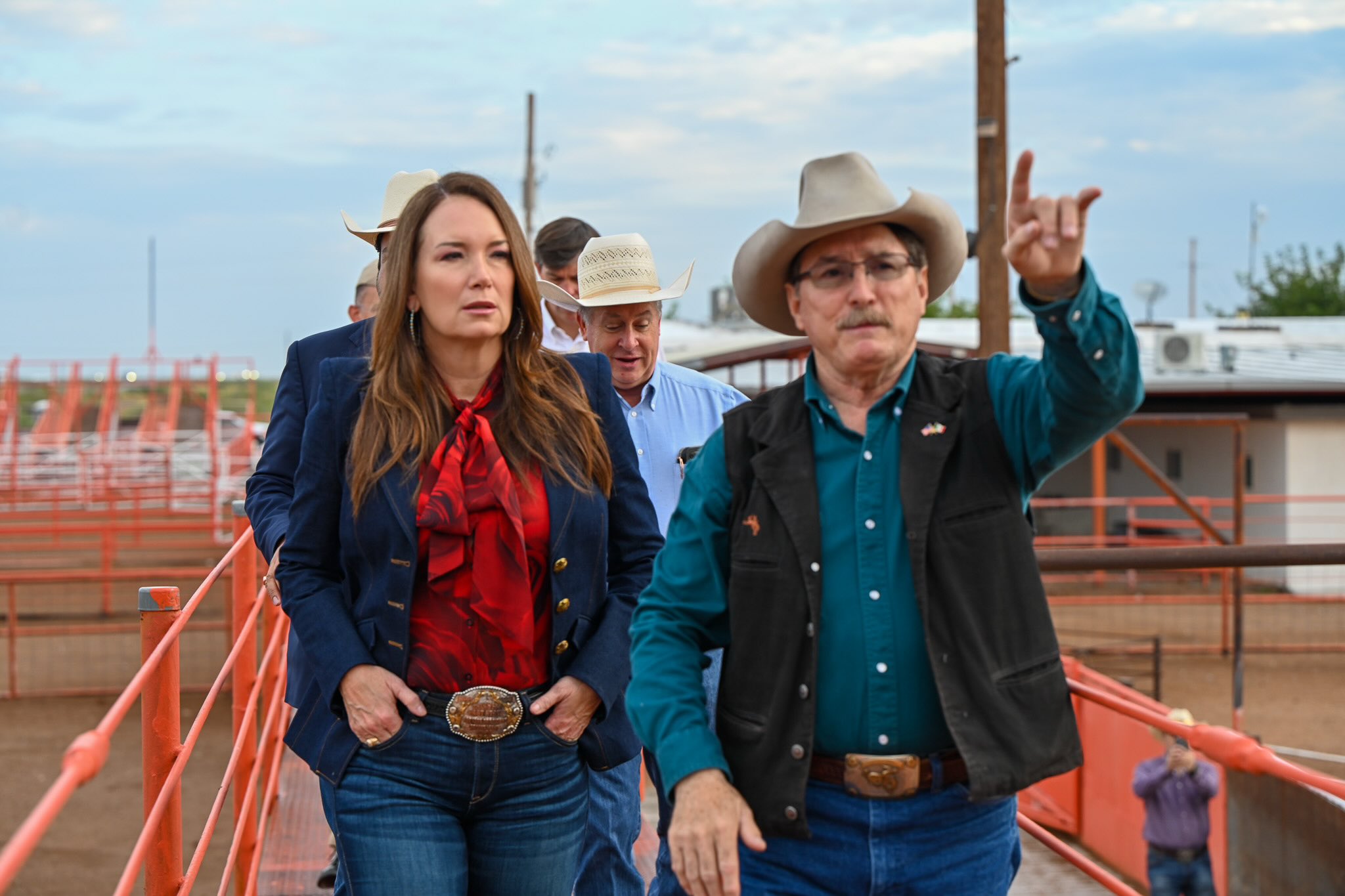
Border Report’s Aracely Lazcano reported that the USDA is “reopening a trade route that handled 43% of all Mexican cattle imported into the United States during the past five years. The reopening also carries an economic impact of more than $1 billion across the region. Before the shutdown, cattle crossing through Santa Teresa supported Mexican ranchers, inspection and transportation jobs in New Mexico and feedlots throughout Texas.”
Progressive Farmer’s Jake Zajkowski reported that “at full capacity, Santa Teresa can handle between 500,000 and 700,000 head annually in both directions.”
AgroLatam’s Marco Díaz Collins reported that “the coming New Mexico reopening will therefore serve as another test of USDA’s effort to reconcile livestock trade, cattle supply and agricultural biosecurity. Success could support further normalization of U.S.-Mexico animal movements and provide greater certainty for ranchers, feedlots and other supply-chain participants. A new detection or evidence of elevated risk, however, could quickly change that trajectory.”
Screwworm Detected in Horse in New Mexico
Reuters’ Tom Polansek reported that “the U.S. confirmed a case of New World screwworm in a horse in New Mexico on Thursday, as the federal government prepared to resume imports of Mexican livestock into the state after blocking trade in an attempt to keep out the flesh-eating parasite.”
“Screwworm infested a horse in Grant County, New Mexico, in the southwest corner of the state near the Mexican border, according to the U.S. Department of Agriculture’s website,” Polansek reported. “It was the state’s second confirmed case since screwworm entered the U.S. from Mexico in June.”
Officials have so far not commented — or said they have no immediate update — on whether or not the new screwworm case will affect the Santa Teresa port of entry reopening.
Experts Surprised by Low Number of US Screwworm Cases So Far
The Washington Sun’s Tyler Spence reported that “only four cases of screwworm were detected in the U.S. in August and none of them in cattle, according to a dashboard maintained by the Agriculture Department. In June, there had been 30 cases detected, and an expectation that the fight against the screwworm had a long way to go.”
“That August number baffles experts, given how far the screwworm had advanced into Texas and the high number of cases in Mexico and Central America,” Spence reported. “‘It’s very strange,’ a former longtime USDA official who worked for the department’s plant and animal health department told NOTUS. ‘It doesn’t make a lot of sense, biologically.’“
